



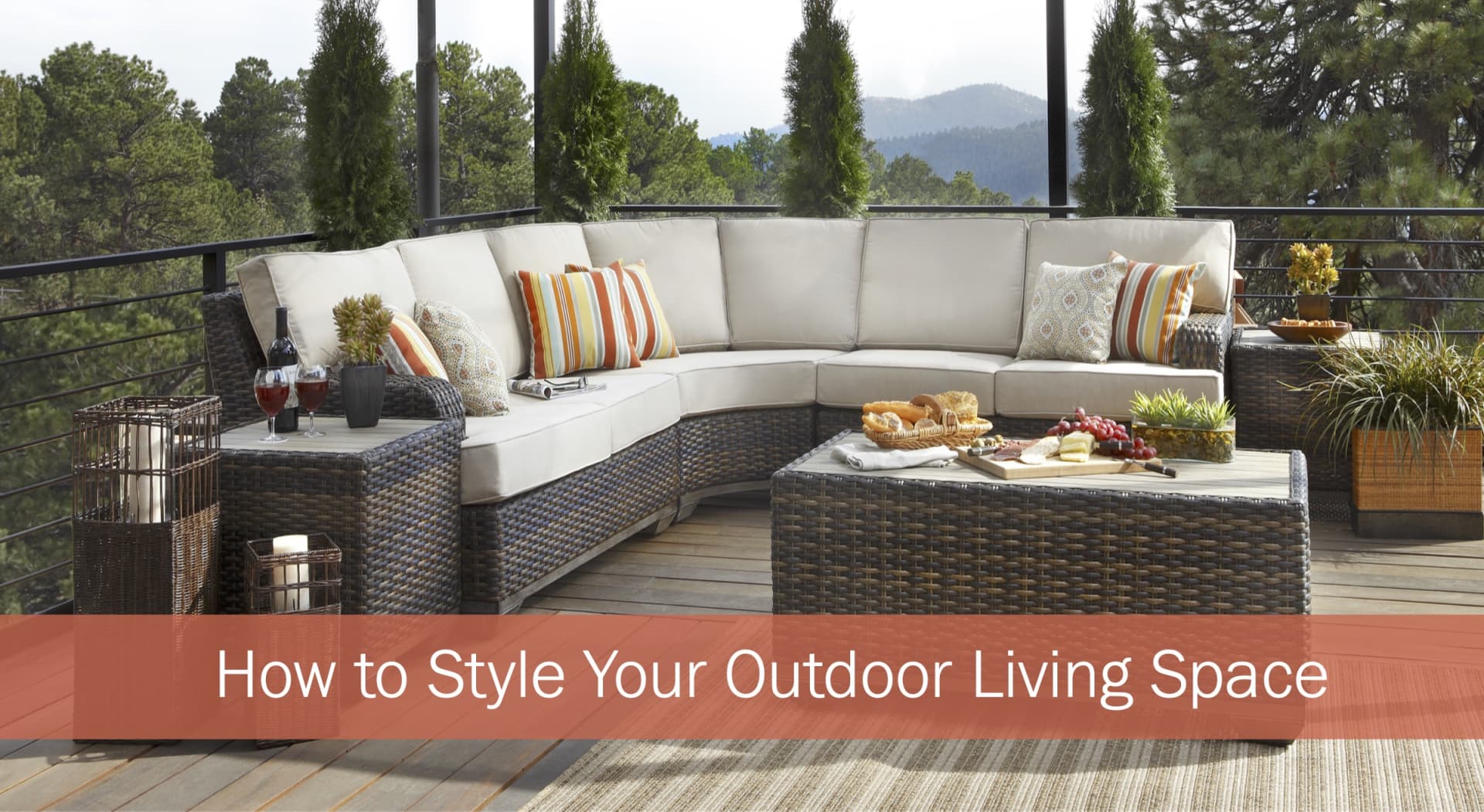
How to Set Up and Style Your Outdoor Living Space
A beautiful patio is great. A patio you actually use — that's the goal. Functionality is what separates a space that looks good in photos from one that earns a spot in your daily routine. The good news is that a well-functioning patio doesn't require a big budget or a complete overhaul — more often than not, it just comes down to smarter planning.
Whether you're starting from scratch or rethinking a setup that just isn't clicking, here's how to build a patio that genuinely works for the way you live.
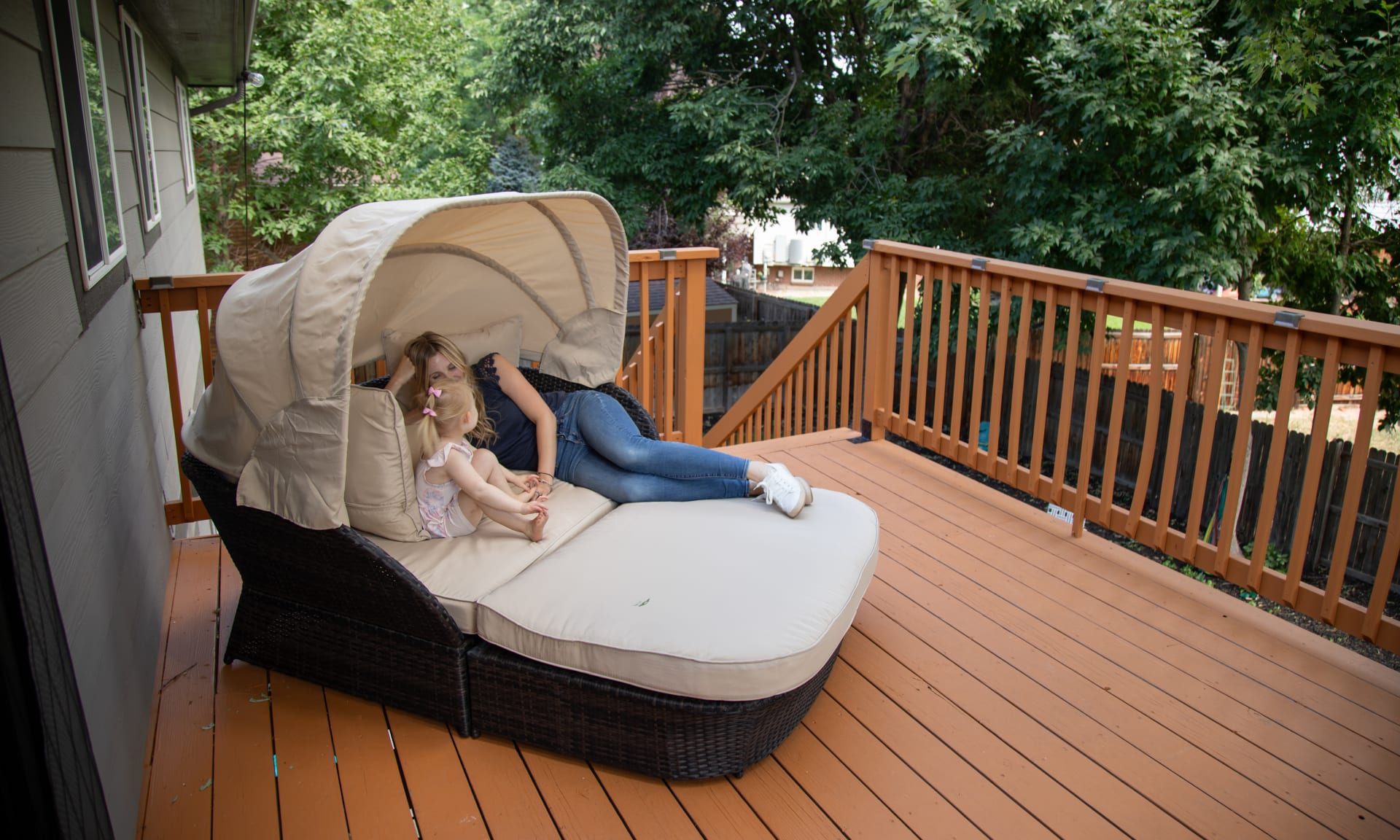
Step 1: Start with Your "Why"
Before you move a single chair, get clear on how you actually plan to use the space. This one question will shape every decision that follows.
Ask yourself:
- Will this space primarily be for dining, lounging, or both?
- Do you entertain groups, or is this mostly for 1–2 people?
- Will you use it in the morning, evening, or all day?
- Do you need it to serve multiple purposes depending on the season?
There's no wrong answer — but being honest here prevents you from building the wrong space. Someone who wants a quiet morning coffee spot needs a very different setup than someone who hosts cookouts every weekend.
Step 2: Complement Your Home’s Style
Your outdoor space should feel like a natural extension of your home. It doesn't have to match perfectly - but when your exterior style and patio style are in sync, the whole look just works.
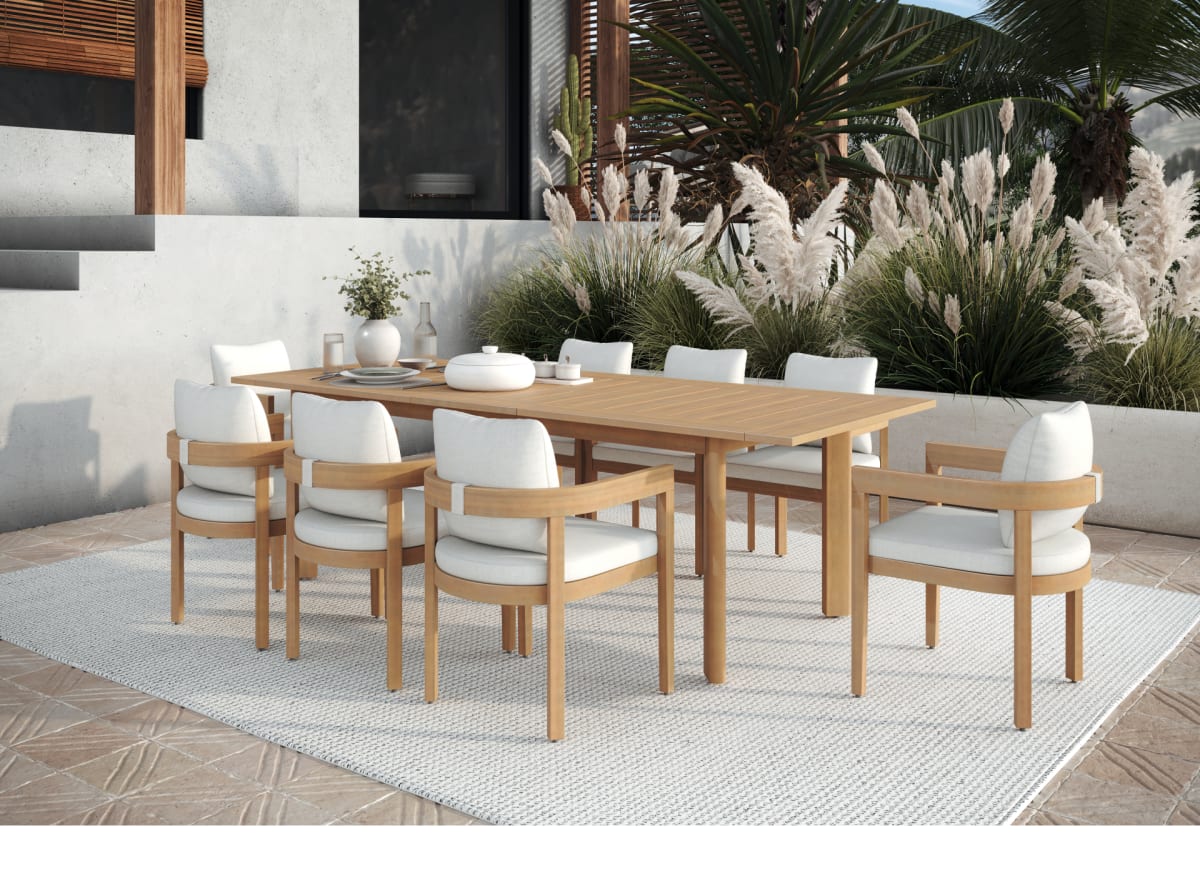
- A sleek modern home pairs beautifully with minimalist furniture featuring clean lines and neutral tones that let the architecture shine.
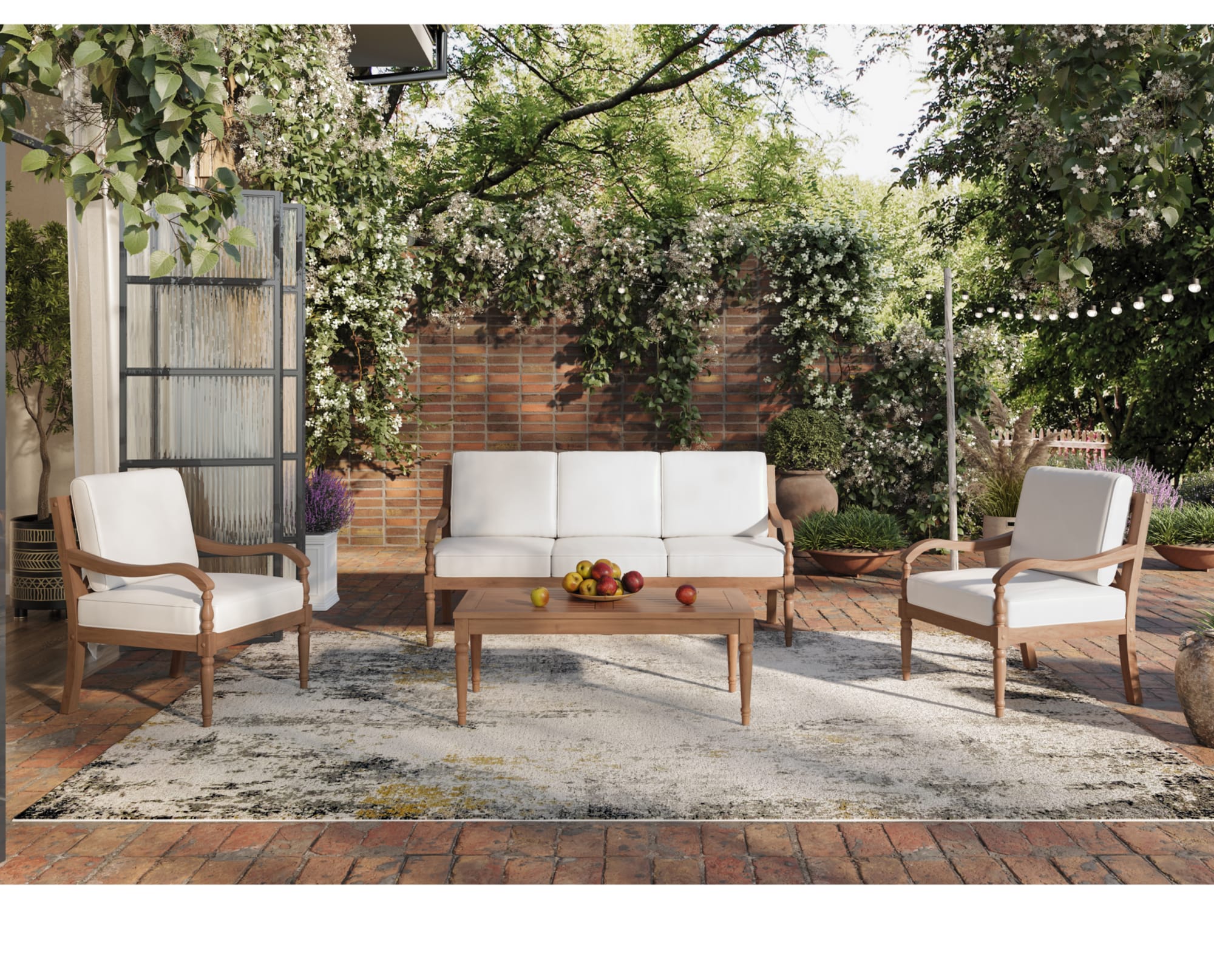
- A classic colonial home is a natural fit for rustic or farmhouse-style outdoor furniture that feel grounded and welcoming.
- A home with Spanish influence shines with a courtyard-inspired setup: wrought iron accents, terracotta, and greenery for that "resort at home" feel.
Not sure about your home's exterior style? Check out our post about different types of home styles to learn more!
Step 3: Define Your Zones
The biggest functional mistake people make on a patio is treating it as one undivided space. A few principles to guide your zoning:
- Traffic flow first: Leave at least 3 feet of clear walkway between furniture groupings.
- Keep functions close to their tools: Your dining area should be near the grill or kitchen access. Your lounging area should be near the door you use most often.
- Use rugs and lighting to define zones visually: You don't need walls — an outdoor rug under a seating group or a pendant light over a dining table does the job.
Not sure how to translate your zone plan into an actual layout? Our Patio Layout Guide features configurations for different space sizes and use cases.
Step 4: Choose Furniture That Earns Its Space
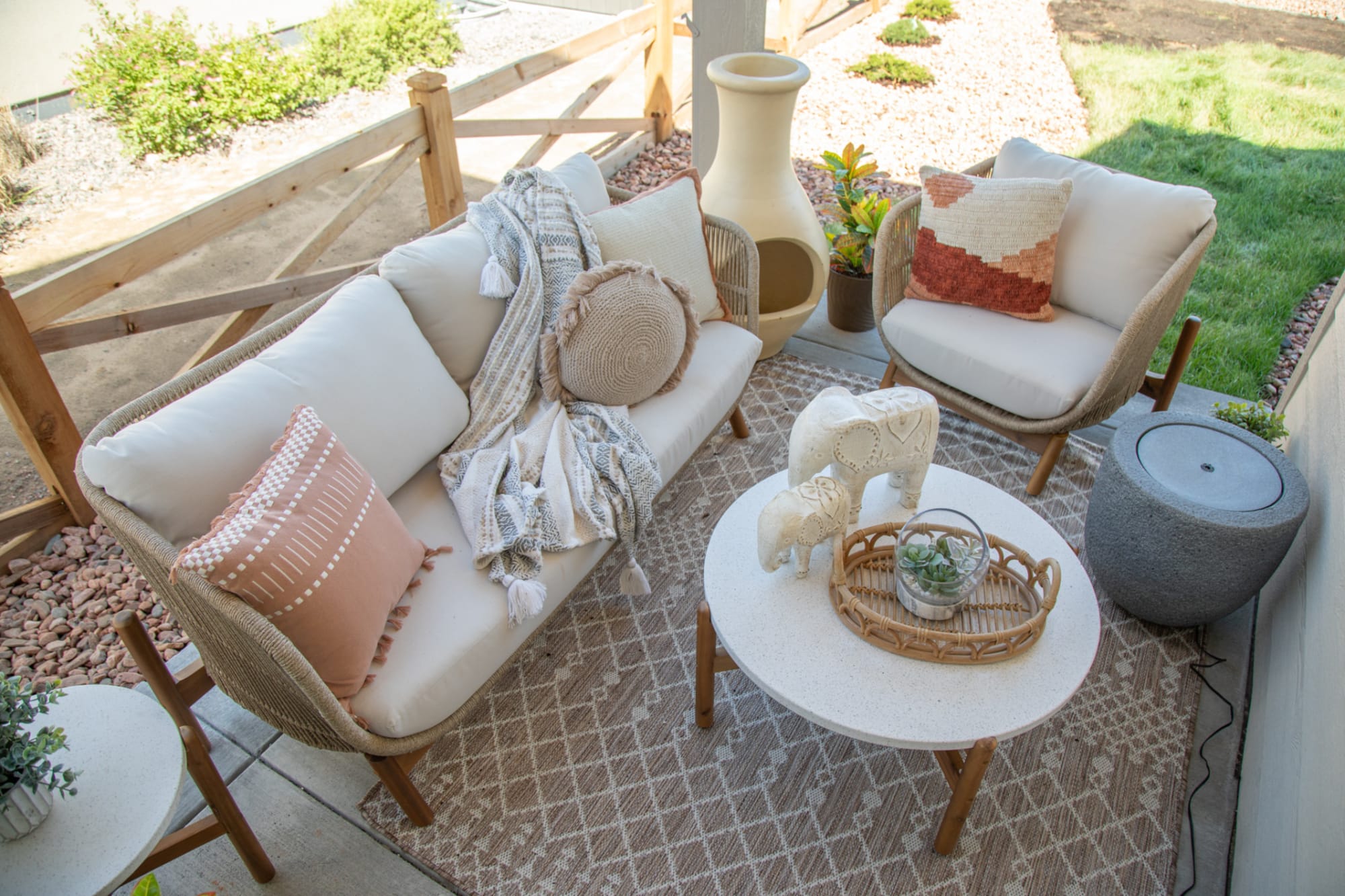
Every piece of furniture on your patio should justify its footprint. That means thinking about function before form.
- For seating: Match your seating count to your realistic guest count. A 6-person sectional on a small patio will feel cramped every day just to accommodate a crowd you host twice a year.
- For tables: Think about what you actually do at the table. A coffee table used mostly for drinks can be lower and smaller. A dining table needs enough surface area to be comfortable — not just functional.
- For multitasking pieces: Storage ottomans, benches with compartments, and side tables that double as planters are worth the investment on any patio.
Step 5: Build in Storage from the Start
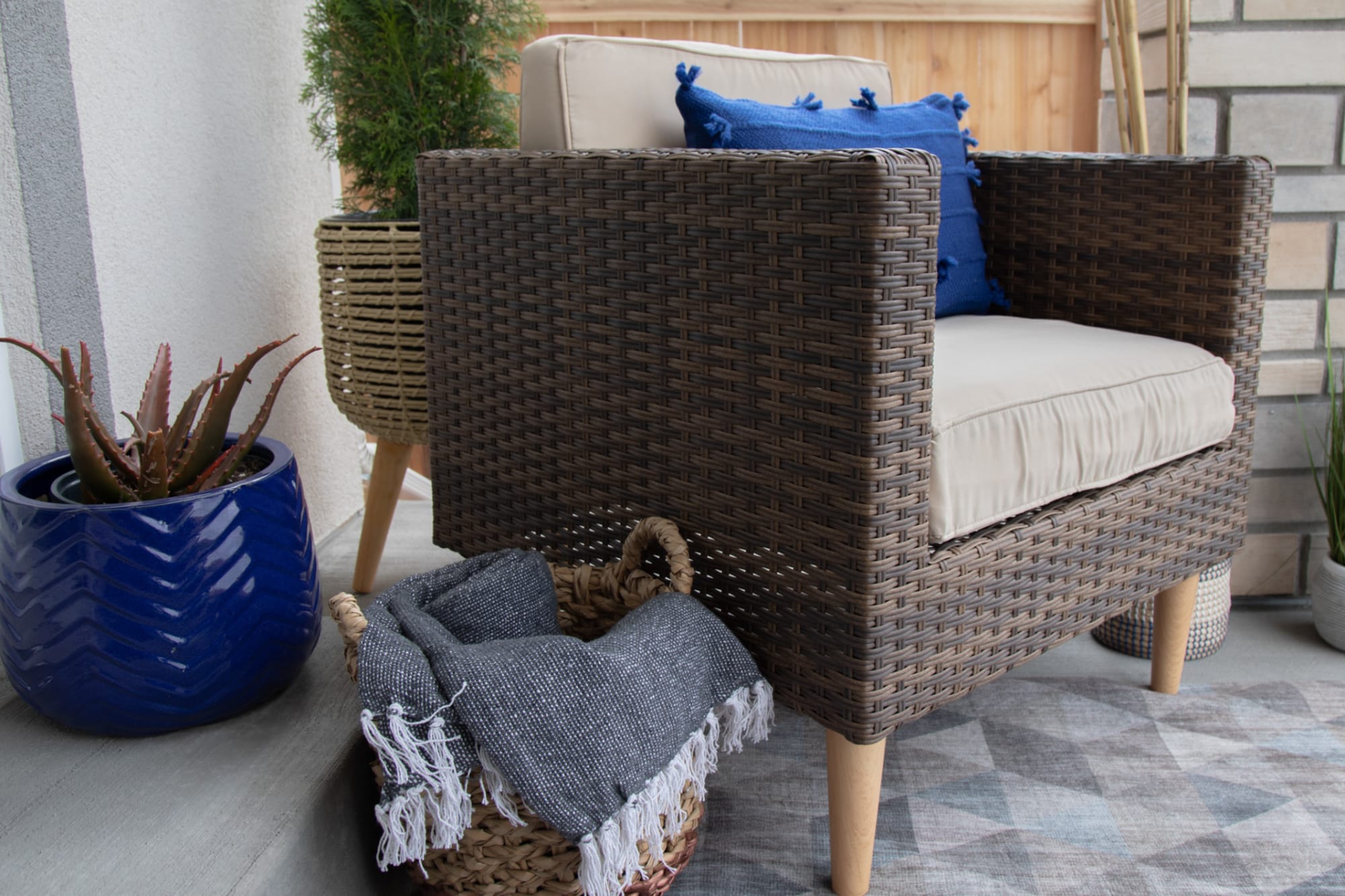
Nothing kills patio functionality faster than clutter — and clutter is inevitable without a storage plan. Cushions, throws, candles, tools, kids' toys — it all has to go somewhere.
A few easy ways to build storage into your setup:
- Storage benches along a railing or fence line add seating and hidden storage without eating up floor space.
- A deck box, storage ottoman, or basket near your seating area keeps frequently used items (cushions, blankets, remotes) accessible without being visible
- A small rolling cart near a grill area corrals tools, seasonings, and supplies in one place and moves easily when not in use
If you think about storage after the furniture is already placed, it's an afterthought. If you plan for it from the start, it becomes invisible — and that's exactly where it should be.
Step 6: Plan for the Elements — Not Against Them
A functional patio has to work with your local climate, not pretend it doesn't exist. Two things to nail down early:
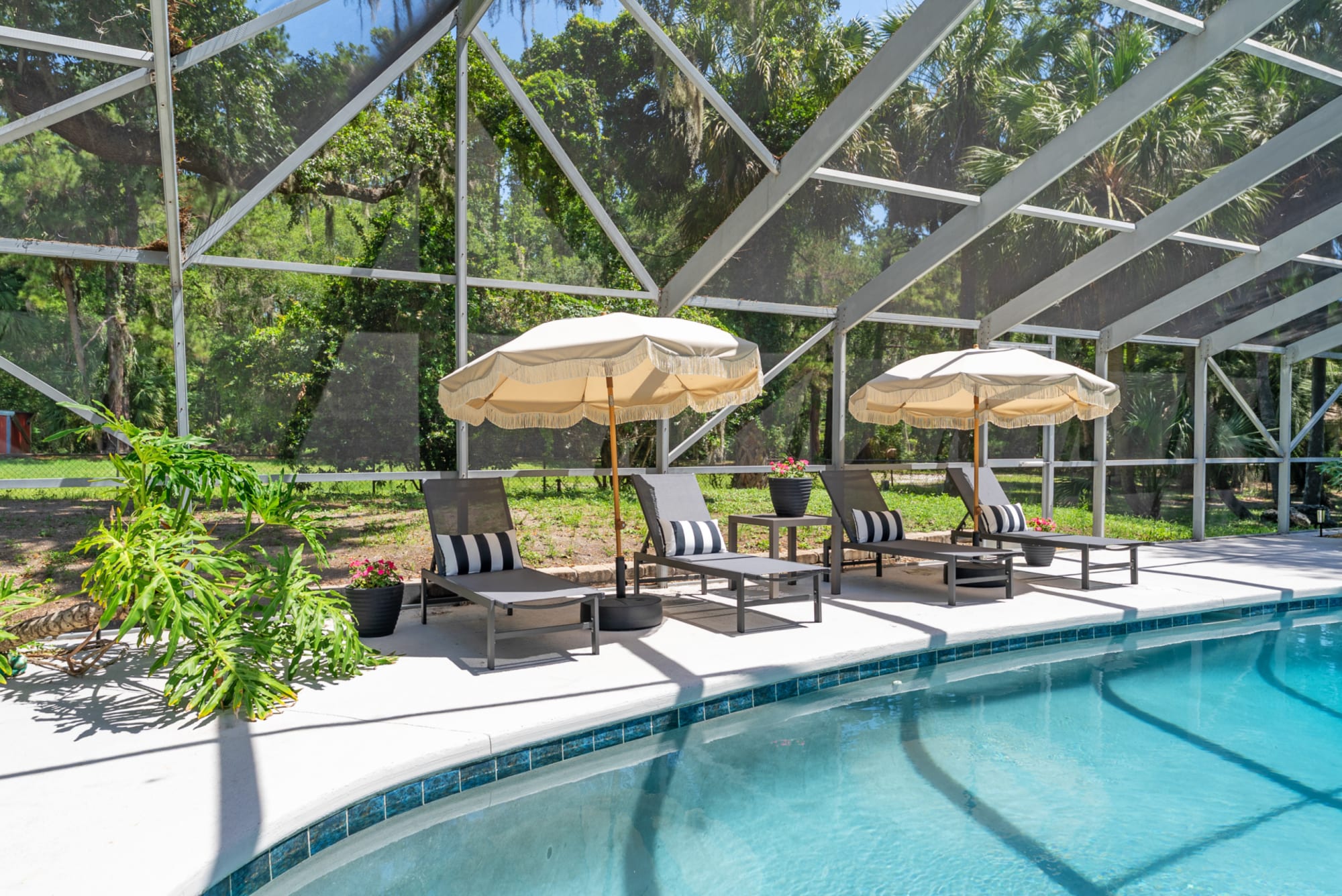
- Shade: If your patio gets direct afternoon sun, shade isn't a luxury — it's what determines whether you actually use the space. An umbrella works well for smaller dining areas; a pergola or shade sail covers larger zones and adds architectural interest.
- Weather-proofing your choices: Outdoor furniture that can't handle your local conditions won’t work. If you're in a rainy climate or coastal area, material selection matters enormously — we cover exactly what to look for in our guide to The Best Patio Furniture for Different Weather Conditions.

Step 7: Light It for How You'll Use It
Lighting is one of the most overlooked functional elements of a patio setup — not just ambiance, but usability. A well-lit patio is one you can use after dark; a poorly lit one sends everyone inside by 8pm.
Think in layers:
- Task lighting for cooking or dining areas (pendant lights above a dining table, a focused light near the grill)
- Ambient lighting for lounge areas (string lights overhead, lanterns on side tables)
- Safety lighting along steps, pathways, or level changes — solar-powered path lights handle this with zero wiring
You don't need all three everywhere — just make sure each zone has enough light to serve its purpose after sunset.
Your Outdoor Space Is Calling (For A Makeover)
A functional patio isn't the most glamorous goal — but it's the one that actually pays off every single time you walk outside. When the layout makes sense, the patio furniture fits how you live, and everything has a place, the space stops feeling like a project and starts feeling like a natural part of your home. That's when you stop thinking about going outside and just... go.
Get the setup right first, and the style will follow naturally. The rest is just details — and the fun kind, at that.
Explore More About the Outdoors
Go to the Blog
Patio Layout Guide
Design your dream patio with four smart layouts—chef’s zone, cozy retreat, entertainment hub, and view-focused setup—plus tips for ambiance and durability.

The Best Patio Furniture for Different Weather Conditions
Discover the best patio furniture materials for every climate, from metal to synthetic resin.
Patio Layout Guide
Design your dream patio with four smart layouts—chef’s zone, cozy retreat, entertainment hub, and view-focused setup—plus tips for ambiance and durability.
The Best Patio Furniture for Different Weather Conditions
Discover the best patio furniture materials for every climate, from metal to synthetic resin.