


Iconic Home Styles That Define American Architecture & Beyond
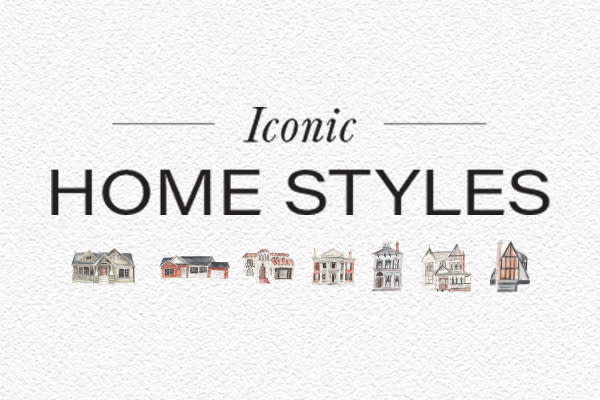
From the cozy charm of a Craftsman bungalow to the grandeur of Greek Revival columns, America's architectural landscape tells the story of our evolving tastes, needs, and dreams. Each era brought new styles that reflected the cultural moment—whether it was the post-war optimism of Ranch homes, the romantic nostalgia of Colonial Revival, or the vacation-ready freedom of A-Frame cabins. These homes aren't just structures; they're expressions of who we were and who we aspired to be.
These ten iconic home styles have shaped neighborhoods across the country, each bringing distinctive character and timeless appeal that continues to influence modern design today. Whether you're furnishing a historic home, drawing inspiration for a renovation, or simply appreciating the houses in your neighborhood, understanding these architectural styles reveals the enduring elements that make a house feel like home—from exposed beams and wide porches to elegant columns and decorative details that never go out of style.
1. The Craftsman House Style
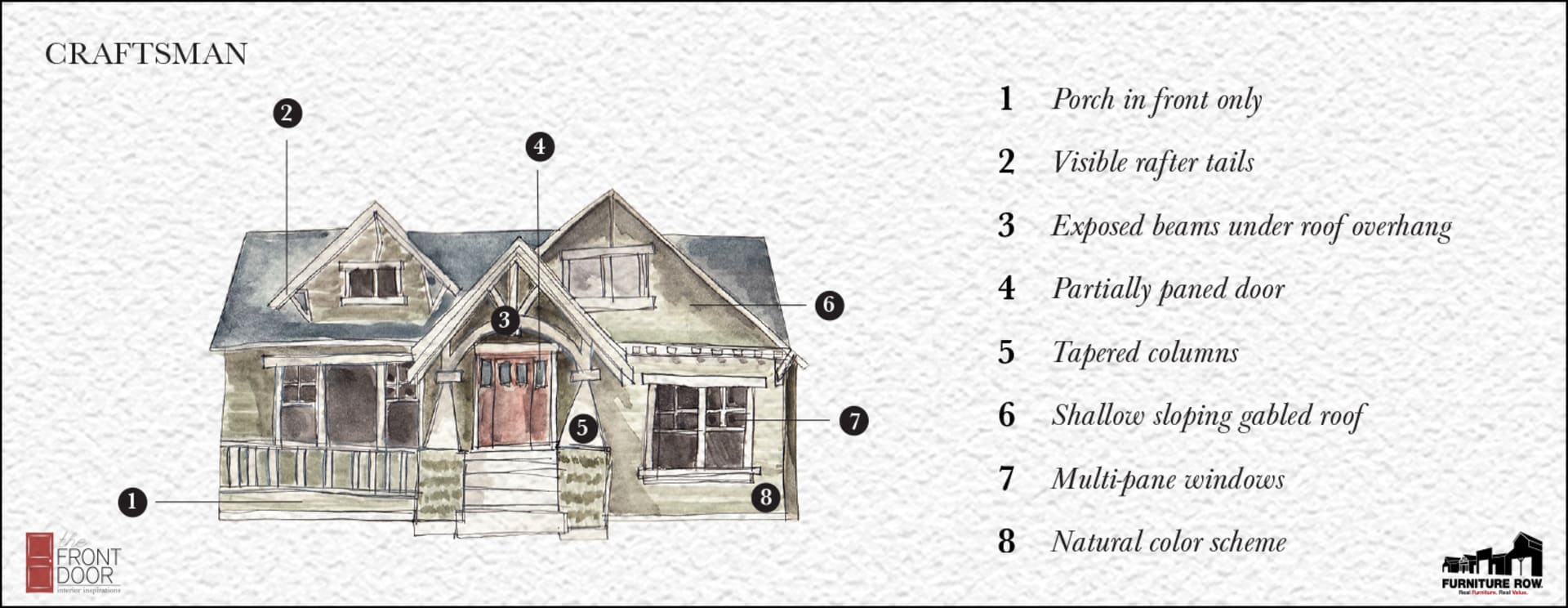
The Craftsman style emerged from the Arts and Crafts movement at the turn of the 20th century, becoming the go-to look for smaller American homes between 1900 and the early 1920s. It rejects mass production in favor of handcrafted character, with a front-only porch, tapered columns, visible rafter tails, and brackets tucked under a shallow, gabled roof. Multi-pane windows, a partially paned front door, and a natural color palette complete its warm, handcrafted charm.
Why It Became Popular
Craftsman homes gave the growing middle class something that felt honest and well made, without the luxury price tag or fussy ornamentation. They balanced beauty with practicality, making thoughtfully designed architecture feel attainable.
- Accessible through mail-order plans and pattern books, so buyers could “order up” a stylish home.
- Practical rooflines and deep eaves suited to a range of climates, especially warmer regions.
- Aesthetic that felt handcrafted, not factory-made, appealing to people tired of industrial sameness.
Modern-Day Influence
The appeal now is less about style labels and more about the feeling of comfort and authenticity.
- Exposed beams, built-ins, and trim signal craftsmanship and permanence in a space
- Natural woods and stone add warmth, texture, and a grounded connection to nature
- Artisanal furniture and décor echo the original “handmade” ethos and pair well with modern pieces
2. The 21st Century Modern House Style
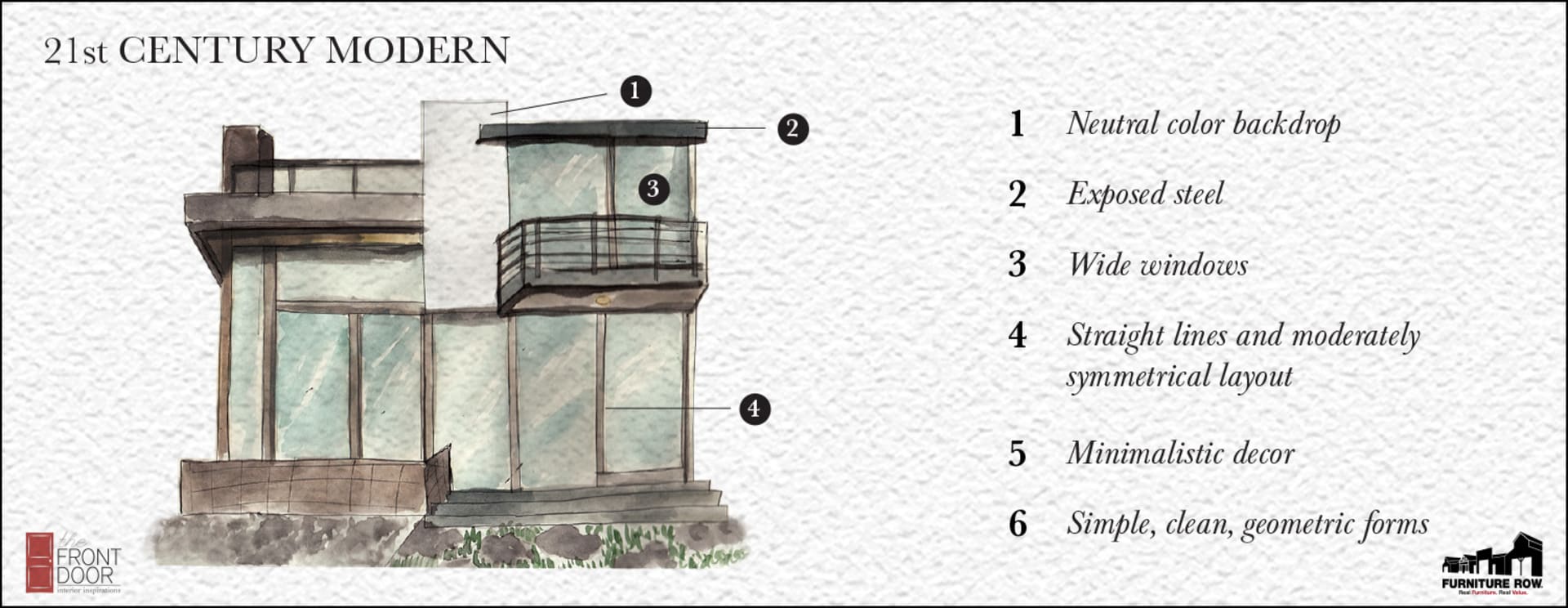
21st Century Modern architecture took off in the early 2000s, pairing sustainable, tech-integrated design with clean, functional spaces. These homes favor neutral backdrops, exposed steel, wide windows, and straight, mostly symmetrical lines that feel open and uncluttered. Minimal decor and simple geometric forms keep the focus on light, flow, and everyday livability.
Why It Became Popular
This style met modern life where it was headed: lighter, leaner, more eco-minded, and increasingly digital. It stripped away visual noise so people could focus on living, not maintaining or decorating.
- Expansive glazing for daylight, passive solar benefits, and constant visual connection to nature.
- Flexible, open layouts that multitask as workspaces, gathering spots, and relaxation zones.
- Emphasis on sustainable, low-clutter living that aligns with wellness and environmental values.
Modern-Day Influence
Today, 21st Century Modern is the visual language of “new” and aspirational.
- Open plans dominate new builds and renovations, even in compact floor plans.
- Sleek lighting, slim furniture profiles, and integrated tech make rooms feel streamlined and high-functioning.
- Neutral shells layered with natural textures and strategic pops of color keep spaces calm but never boring.
3. The A-Frame House Style
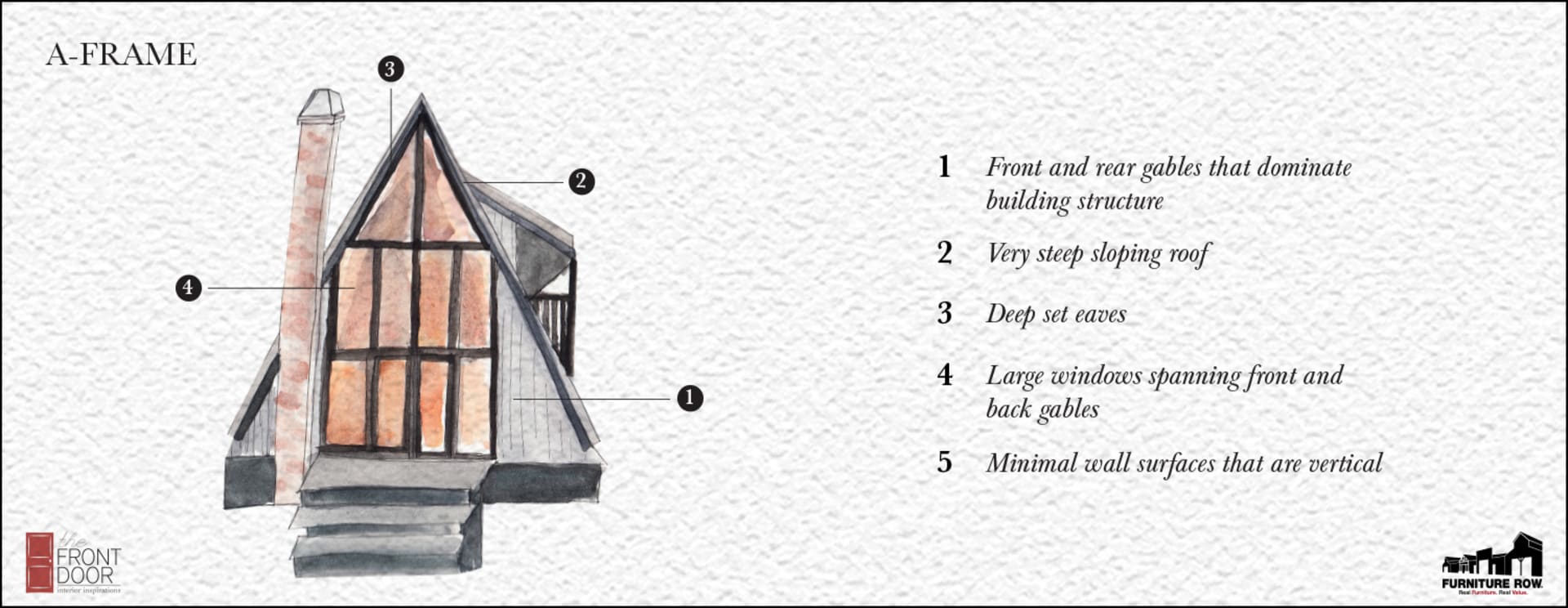
The A-Frame house surged in popularity from the mid-1950s through the 1960s, becoming a symbol of vacation living and middle-class freedom. Inspired by R.M. Schindler’s 1934 Lake Arrowhead design, these dramatic triangles feature front and rear gables that dominate the structure, very steep roofs, and deep eaves. Expanses of glass at the gable ends, and minimal vertical wall surfaces create bright, cabin-meets-contemporary spaces.
Why It Became Popular
A-frames turned the simple triangle into an icon of escape and adventure. They promised something different from the typical suburban house, yet stayed approachable for average budgets.
- High-profile magazine features created buzz and made the form instantly recognizable.
- Simple geometry made them affordable to build, quick to assemble, and efficient to heat in cold climates.
- Kits and plan books let DIYers create their own retreat, fueling the dream of a personal cabin or ski house.
Modern-Day Influence
The A-frame spirit shows up wherever small spaces want to feel big, bold, and close to the outdoors.
- Lofted sleeping areas and vaulted ceilings deliver a sense of drama and volume in compact footprints.
- Dramatic glazing that frames views like artwork blurs the line between interior and landscape.
- Inspiration for tiny homes, cabins, and off-grid getaways that favor experience over square footage.
4. The Colonial Revival House Style
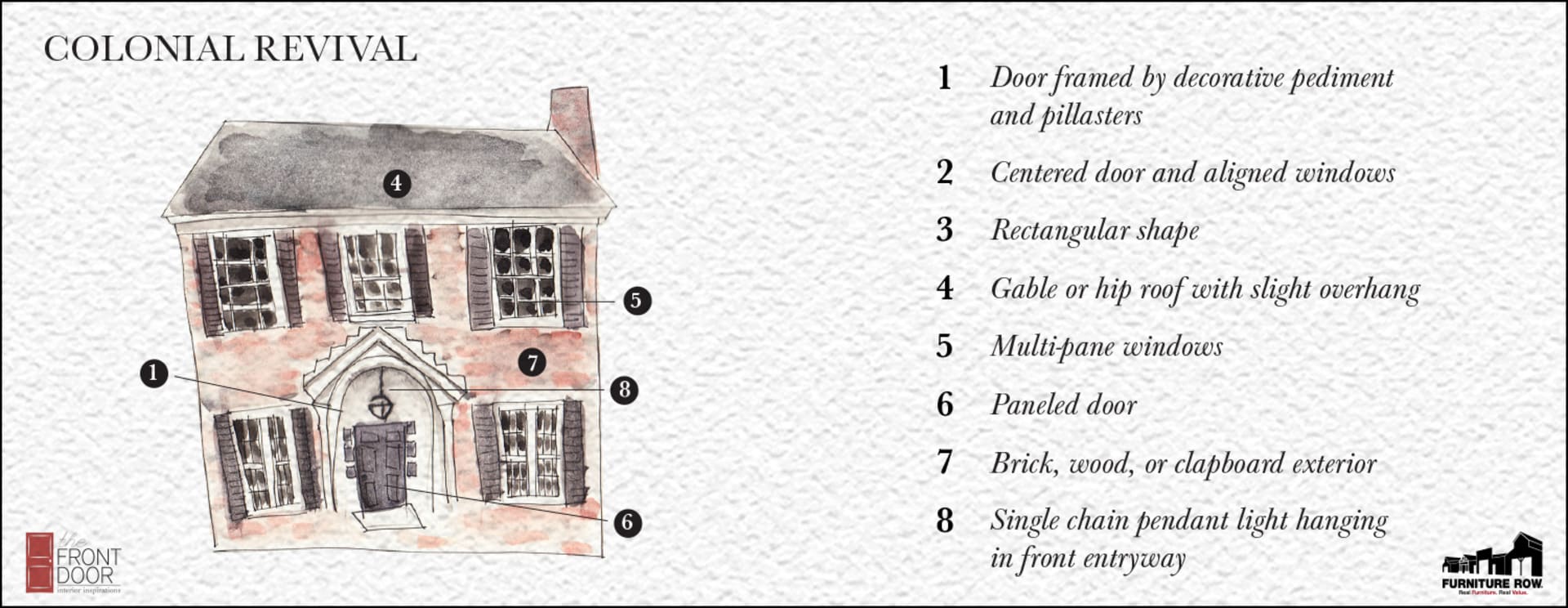
The Colonial Revival is the only major American house style directly rooted in the nation’s own early architecture, rising in popularity from the 1880s through the 1960s. These homes spotlight symmetry and quiet grandeur with centered, paneled doors framed by pediments and pilasters, evenly aligned multi-pane windows, and a rectangular form capped by a modest gable or hip roof. Brick, wood, or clapboard exteriors and a simple single-chain pendant at the entry keep the look stately yet understated.
Why It Became Popular
Colonial Revival wrapped patriotism and polish into one familiar form that felt rooted in American history. It reassured buyers with symmetry and order at a time of rapid change.
- Timeless proportions and balanced façades felt “proper” yet comfortable for everyday life.
- Classical details—shutters, columns, pediments—added just enough ornament without overwhelming the structure.
- Simplified versions adapted well to growing suburban neighborhoods and postwar housing developments.
Modern-Day Influence
Its DNA quietly underpins what many buyers call a “classic” or “traditional” home.
- Central stair halls and balanced fronts create intuitive, easy-to-navigate layouts.
- Paneled doors, shutters, and crown molding instantly read as polished and established.
- Works seamlessly with everything from heirloom antiques to streamlined, modern furnishings.
5. The Queen Anne House Style
Queen Anne architecture marked the height of the 19th-century picturesque romantic movement, dominating from 1880 to 1900 with its exuberant, asymmetrical flair. Created and championed by Richard Norman Shaw, these homes pile on visual interest: steep cross-gabled roofs, varied wall textures, and wraparound porches dripping with detail. Fish scale siding and ornament on nearly every surface make Queen Anne houses delightfully over-the-top.
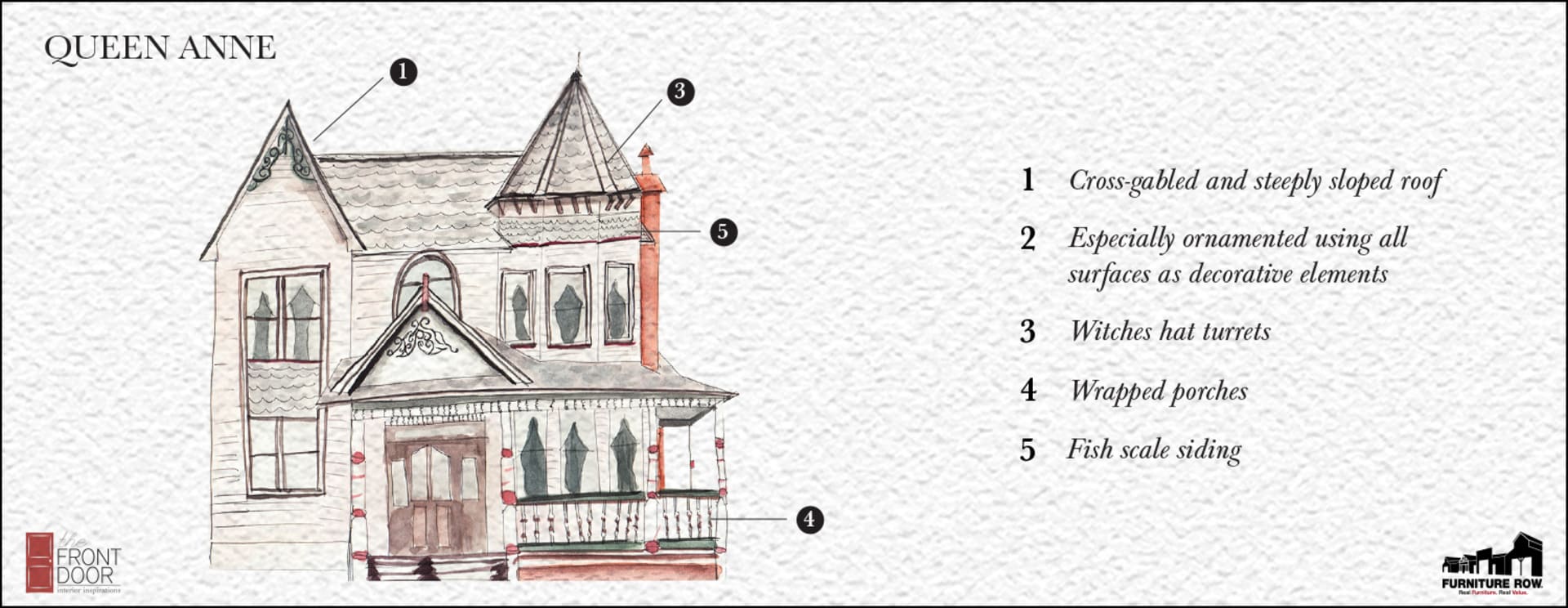
Why It Became Popular
Queen Anne let homeowners turn their houses into true conversation pieces and neighborhood landmarks. The style embraced individuality at a time when industrialization was making everything else feel standardized.
- Pattern books and early design magazines amplified the look beyond major cities.
- Towers, turrets, bay windows, and wraparound porches signaled status and creativity.
- Layered textures, shingles, and bold paint schemes made each façade feel custom and theatrical.
Modern-Day Influence
We still borrow its love of “more is more” when we want personality to shine.
- Ornate trim, gingerbread details, and turned porch posts bring a sense of romance and nostalgia.
- Rich color palettes and mix-and-match materials create visual depth on exteriors and interiors.
- Bay windows and projecting forms add dimension and drama to homes that might otherwise feel flat.
6. The Ranch House Style
Born in 1950s California, the Ranch style broke from tradition with a low-slung, unapologetically modern feel perfect for post-war family life. Typically one story and horizontally oriented, these homes stretch into rectangular, L-, or U-shaped footprints beneath hipped or gabled roofs with deep eaves. Simple facades, little to no ornamentation, and an attached garage underscore the emphasis on casual, flexible living.
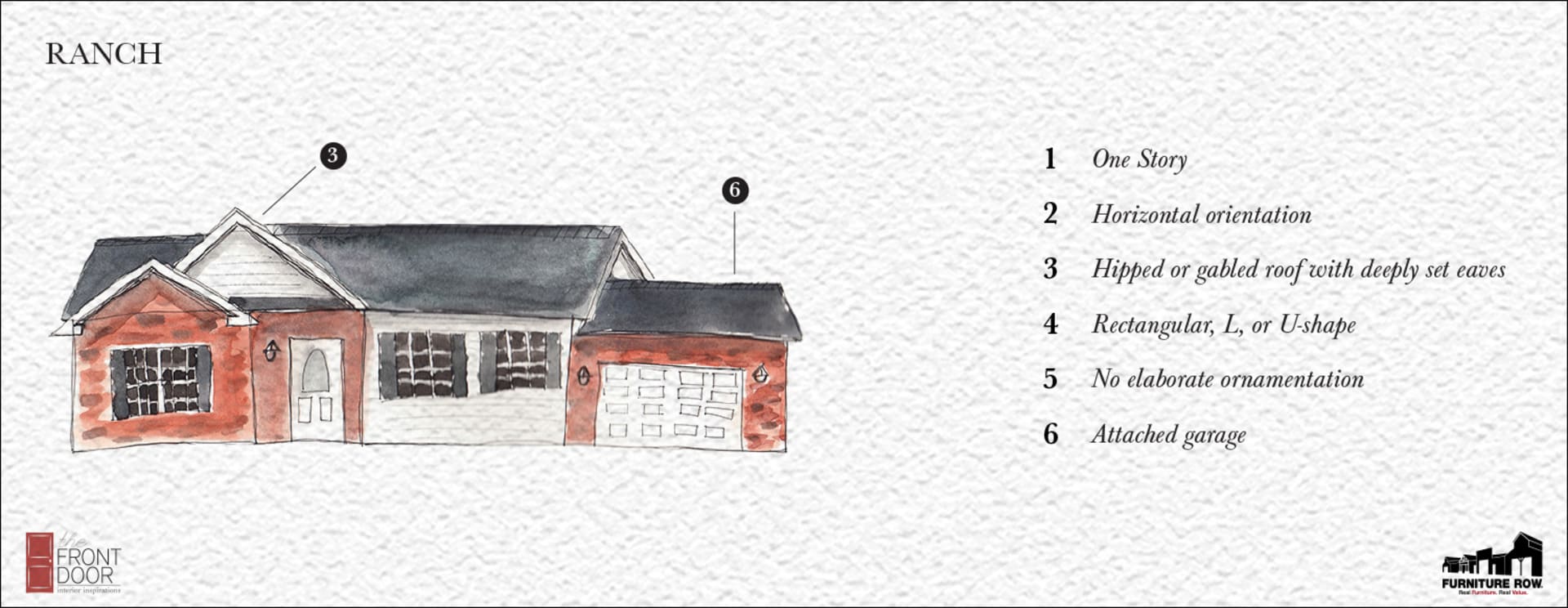
Why It Became Popular
Ranch homes aligned perfectly with postwar suburban life, car culture, and a new sense of informality. They made day-to-day living simpler, more relaxed, and more connected to the backyard.
- One-level living suited young families, aging relatives, and multigenerational households.
- Open, casual layouts fit TV dinners, kids’ play, and laid-back entertaining better than formal parlors.
- Sliding doors and picture windows softened the divide between indoors and patios, lawns, and pools.
Modern-Day Influence
Ranch thinking is baked into how we design for comfort and ease today.
- Open-concept great rooms with kitchen, dining, and living all flowing together.
- Easy backyard access and patios that function as extensions of the main living zone.
- Attached garages, mudroom-style entries, and simple forms that prioritize practicality over ceremony.
7. The Spanish Revival House Style
Spanish Revival architecture blends Spanish Baroque, Spanish Colonial, Moorish Revival, and Mexican Churrigueresque influences into one elegant, enduring style. Hallmark details include white stucco exteriors, arched windows and doors, and red terracotta roof tiles on hipped or gabled roofs with tiled overhangs. Balconies and decorative ironwork add a romantic, old-world richness that feels timeless in American neighborhoods.
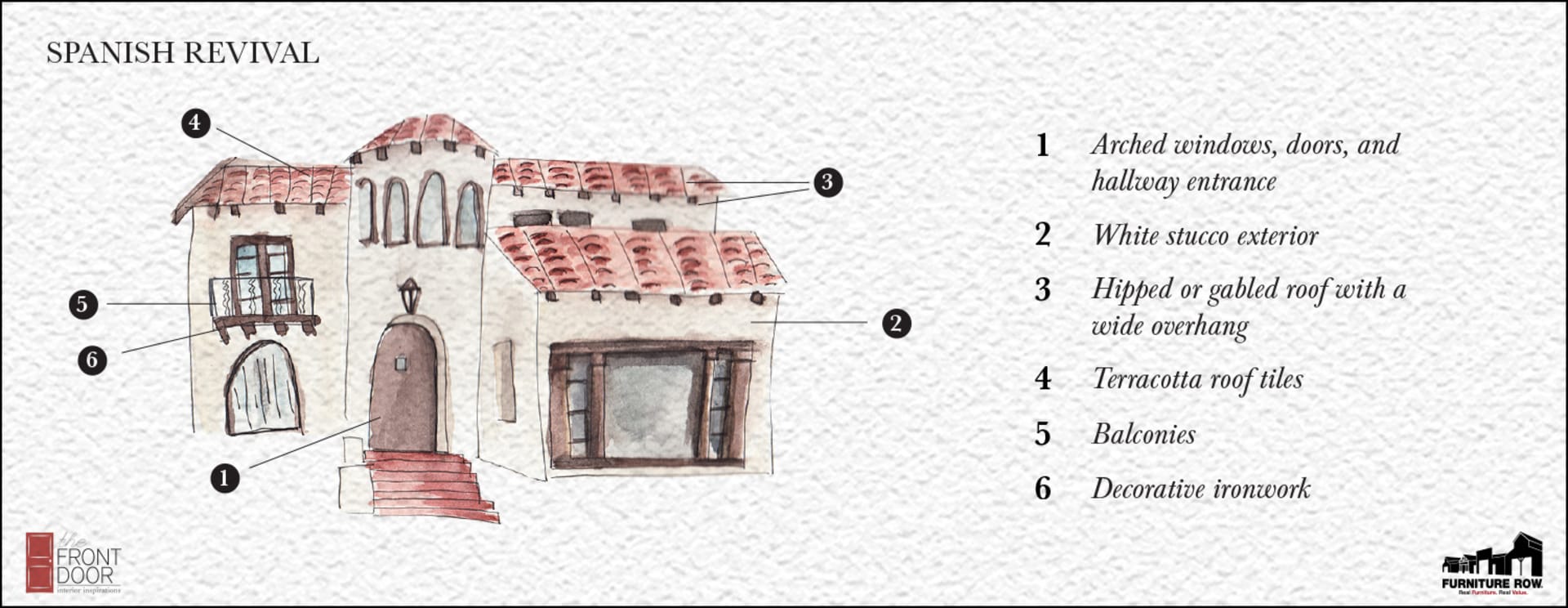
Why It Became Popular
Spanish Revival offered romance that also worked with the climate, especially in the Southwest and coastal regions. It made everyday homes feel like villas tucked into sun-drenched hillsides.
- Thick stucco walls moderated heat and provided a durable, weather-friendly envelope.
- Courtyards and arcades created shaded, breezy spaces ideal for socializing and siestas.
- Arches, tile, and wrought iron layered in storybook charm and Old World character.
Modern-Day Influence
It still shapes the idea of relaxed, Mediterranean-inspired living and “resort at home.”
- Arched doors and windows become instant focal points in both new builds and remodels.
- Exposed beams, terracotta tile, and patterned ceramics bring warmth and texture to kitchens, baths, and outdoor spaces.
- Courtyard-style patios and covered loggias anchor outdoor rooms designed for dining, lounging, and year-round use.
8. The Gable Front and Wing House Style
The Gable Front and Wing style is a practical, distinctly American house form that took hold in the 19th century. These homes are defined by their simple L- or T-shaped layouts, where a front-facing gable pairs with a side wing to create a recognizable profile. A spindlework porch and slightly elevated front height lend just enough charm without sacrificing straightforward function.
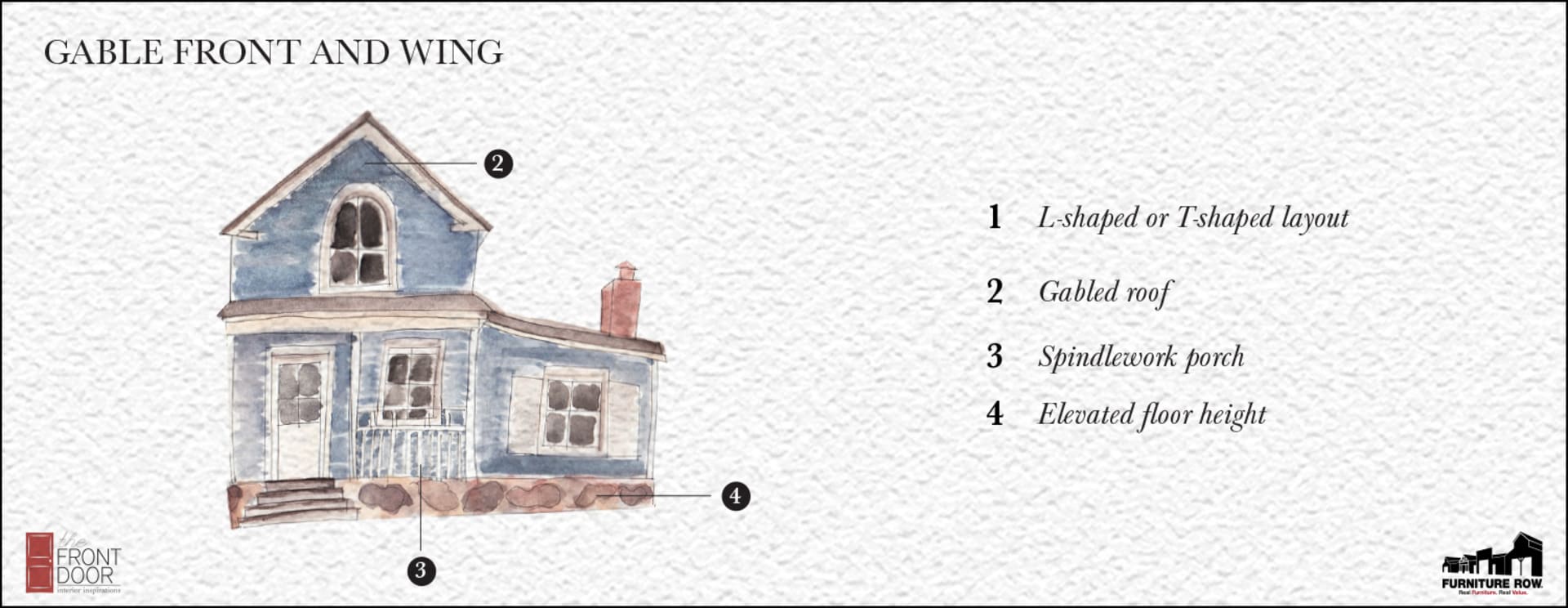
Why It Became Popular
This style solved practical needs with just enough flourish to feel welcoming. It grew naturally as families and needs expanded.
- Simple L- or T-shaped plans allowed straightforward additions and flexible room arrangements.
- Elevated foundations improved drainage and air flow, especially in wetter or variable climates.
- Spindlework porches and trim delivered charm and street appeal without a big cost increase.
Modern-Day Influence
You see its influence whenever homes use an “L” to shape both interior flow and outdoor space.
9. The Greek Revival House Style
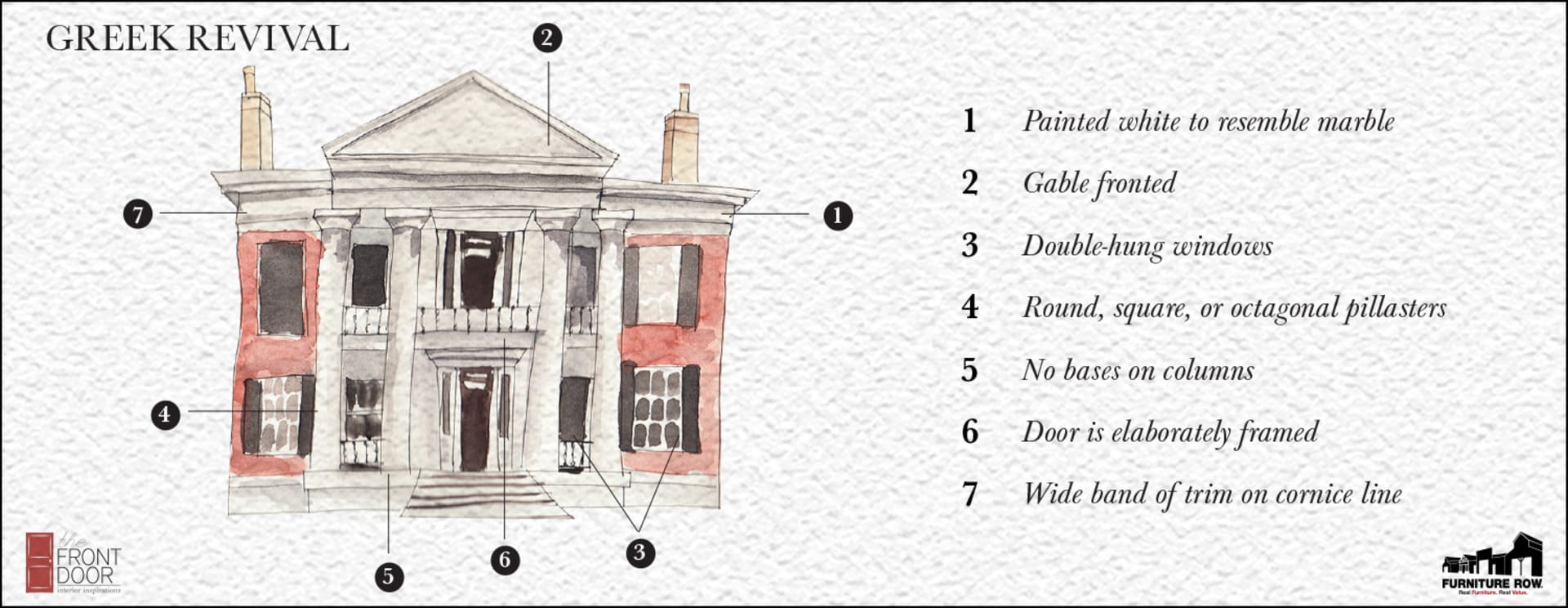
Greek Revival homes, popular from the 1830s to the 1850s, celebrated the democracy and beauty of ancient Greece in an American context. Typically painted white to mimic marble, they feature gable-front forms, double-hung windows, and bold pilasters—round, square, or octagonal—often without bases. Elaborately framed doors and a wide band of trim along the cornice line complete their temple-like presence.
Why It Became Popular
Greek Revival let everyday Americans borrow the gravitas of ancient temples and civic buildings. It translated lofty ideals into residential architecture.
- Columned entries and tall façades projected dignity, stability, and civic pride.
- Strong symmetry felt orderly, controlled, and aspirational during a period of nation-building.
- Classical moldings and pediments created a cohesive, elevated look, even on modest homes.
Modern-Day Influence
Its cues still define what feels “grand” and ceremonial in architecture.
- Pedimented doorways, bold trim profiles, and paneled surrounds frame important entry moments.
- Symmetrical fronts anchor streetscapes and provide instant curb appeal.
- Use of columns—full, half, or implied through pilasters—continues to add drama to porches and porticos.
10. The Italianate House Style
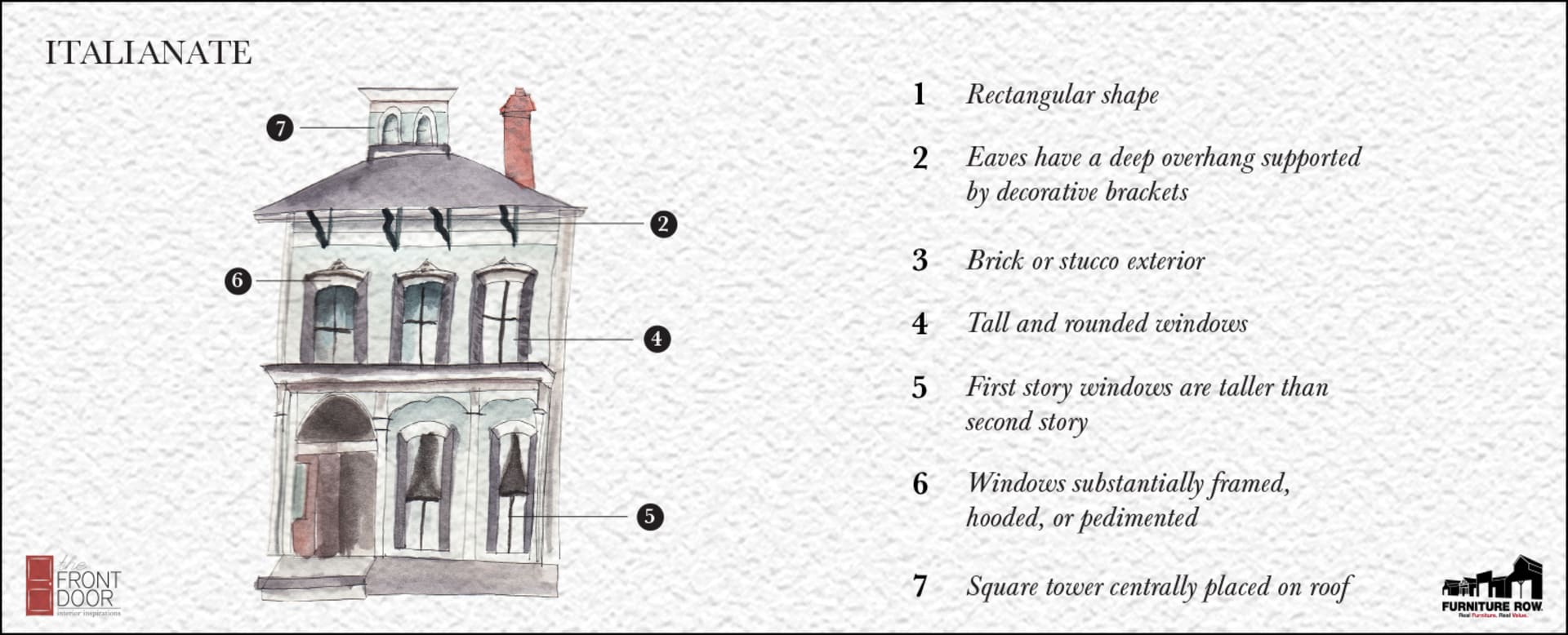
Italianate architecture brought the romance of Italian villas and farmhouses to American streets in the mid-to-late 19th century. These versatile homes often take on a rectangular shape with brick or stucco exteriors, tall rounded windows (with the first story taller than the second), and deep eaves supported by decorative brackets. Architecturally framed, hooded, or pedimented windows and a square tower rising from the roof add to their picturesque silhouette.
Why It Became Popular
Italianate brought European romance and vertical drama to growing American towns and city streets. It offered a picturesque alternative to more restrained styles.
- Low-pitched roofs with heavy cornices and decorative corbels created strong, shadowed rooflines.
- Tall, narrow windows and elongated façades gave homes elegant, upright proportions.
- Towers, arched openings, and ornate surrounds added a sense of fantasy and travel-inspired sophistication.
Modern-Day Influence
Designers still reach for Italianate details when they want instant richness and character.
- Deep eaves with brackets and embellished window heads dress up otherwise simple exteriors.
- Slim, tall windows pair beautifully with layered draperies and high ceilings inside.
- Cupolas and small towers become focal points on roofs, introducing vertical interest and a touch of old-world romance.
Which Iconic House Style Is Your Favorite?
These ten iconic home styles showcase America's rich architectural heritage and our evolving relationship with home design. Whether you're drawn to the handcrafted warmth of Craftsman homes, the sleek simplicity of Mid-Century Modern, or the romantic grandeur of Victorian styles, each offers timeless elements that continue to inspire how we live, decorate, and dream about the perfect home. Understanding these styles helps us appreciate the homes around us and make informed choices about incorporating their best features into our own spaces.
More From Our Blog:
Go to the Blog
Guide to Fabric Pattern Names
Learn the names behind your favorite fabric patterns to shop and decorate your home like a pro.

Style Guide: Farmhouse Style
Discover how to bring timeless warmth into any space with this complete guide to farmhouse style.
Rug Size and Placement Guide
Master area rug size and placement with easy dos and don’ts for living rooms, dining rooms, and bedrooms, plus pro tips for layering.
Guide to Fabric Pattern Names
Learn the names behind your favorite fabric patterns to shop and decorate your home like a pro.
Style Guide: Farmhouse Style
Discover how to bring timeless warmth into any space with this complete guide to farmhouse style.
Rug Size and Placement Guide
Master area rug size and placement with easy dos and don’ts for living rooms, dining rooms, and bedrooms, plus pro tips for layering.