


Style Guide: Art Deco Style Loves Glamour and Geometric Drama
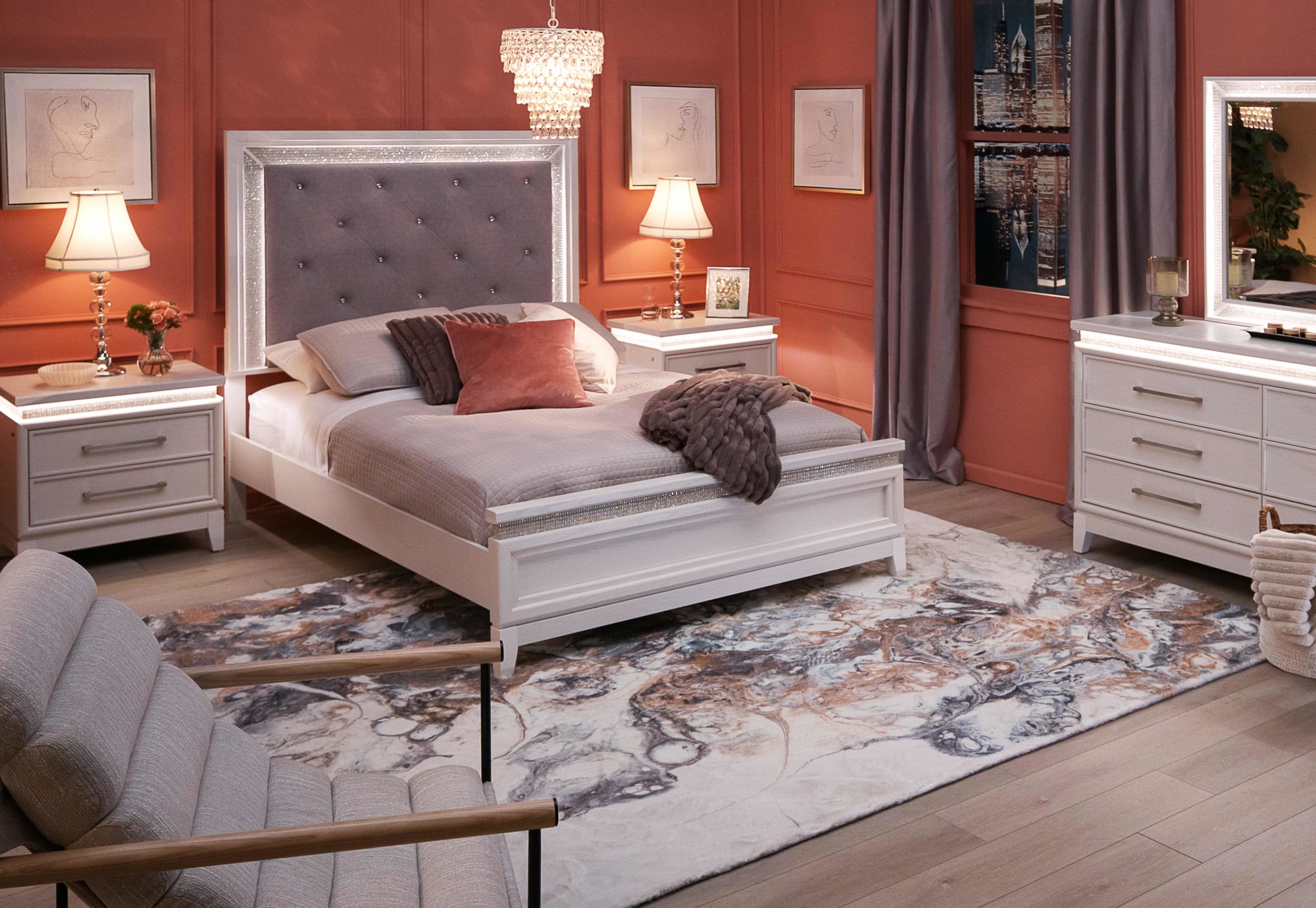
Art Deco style turns everyday rooms into polished, personality-filled spaces. Inspired by the optimism and innovation of the 1920s and 1930s, it pairs crisp geometry with luxurious finishes for a look that feels both vintage and confidently modern. Art Deco is defined by streamlined forms, stylized ornament, and a mix of natural and manufactured materials.
Whether you want a full-on glamorous retreat or simply a few Deco-inspired details, this guide will help you bring its unmistakable elegance home.
What Is Art Deco Style?
Art Deco is a decorative style that emerged in Europe in the 1910s and 1920s, became internationally prominent following the 1925 Paris Exposition, and flourished in the United States during the 1930s. In interiors, it is all about balance: bold, symmetrical forms are softened by curves, reflective surfaces, rich color, and touchable textures.
Defining Elements of Art Deco Style:
- Geometric motifs: Sunbursts, chevrons, zigzags, stepped forms, arches, fans, and diamonds create the visual language of Art Deco.
- Symmetry and structure: Pair matching lamps, chairs, or side tables around a central focal point to make the room feel intentional and grand.
- Luxurious materials: Choose lacquered wood, polished brass, chrome, glass, mirrors, marble, velvet, and richly grained wood finishes for a glamorous layered effect.
- High-contrast color: Black and white, emerald green, sapphire blue, burgundy, blush, ivory, and gold bring dramatic polish to the palette.
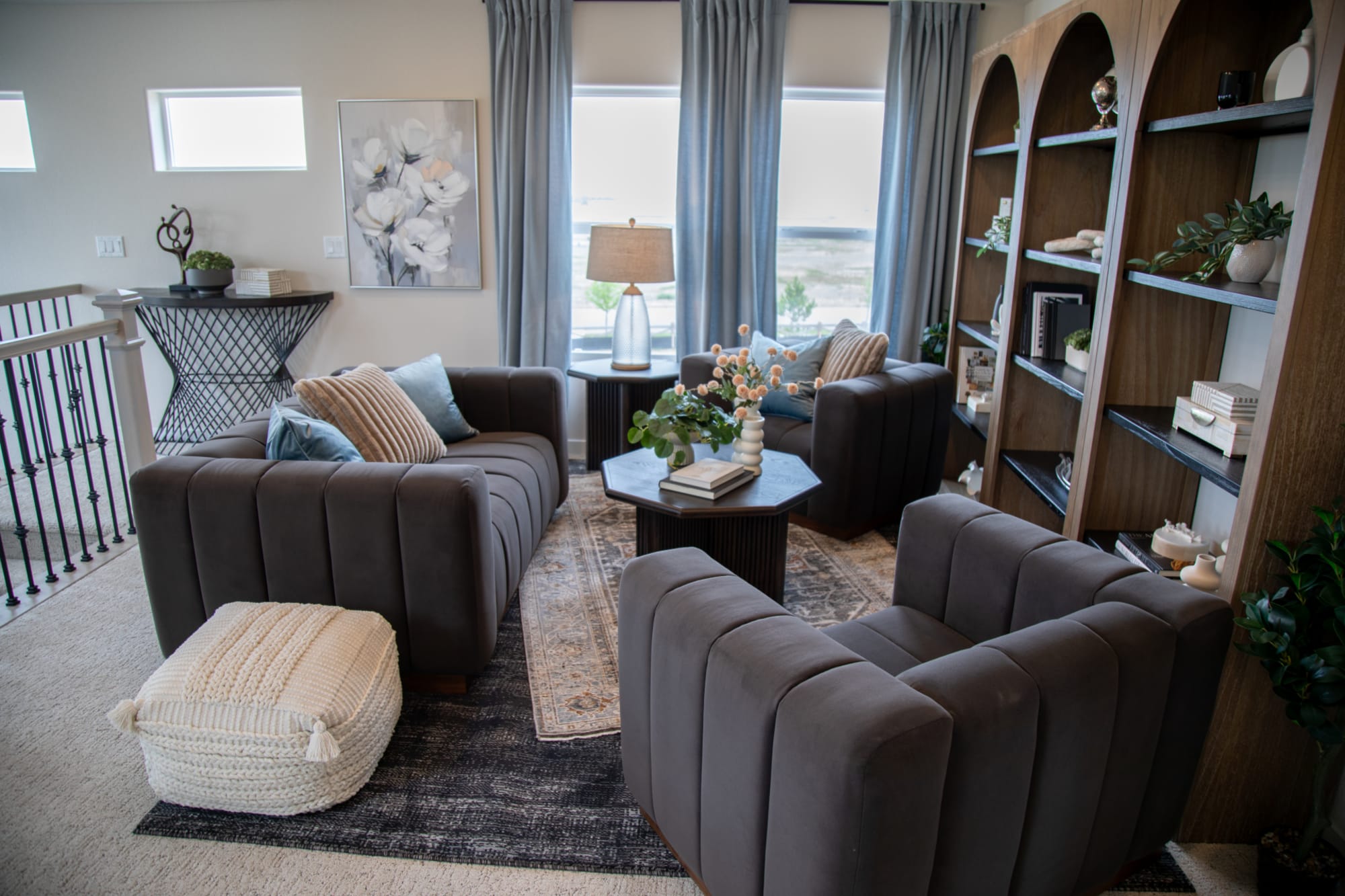
- Sculptural silhouettes: Look for furniture with rounded corners, channel tufting, fluted details, waterfall edges, and sleek tapered legs.
- Decorative lighting: A striking chandelier, globe pendants, or brass sconces can serve as functional jewelry for the room.
How to Achieve Art Deco Style
1. Start With a Strong Color Story
Choose a grounding neutral such as warm white, cream, taupe, charcoal, or black. Then add one or two jewel tones—think emerald, navy, plum, or deep teal—and finish with a metallic accent in brass, gold, or chrome.
- For a softer take, try cream walls, a dusty-rose velvet chair, dark wood furniture, and brass lighting.
- For more drama, use a black feature wall, a white rug with a geometric pattern, and gleaming gold accents.
2. Choose Furniture With Shape
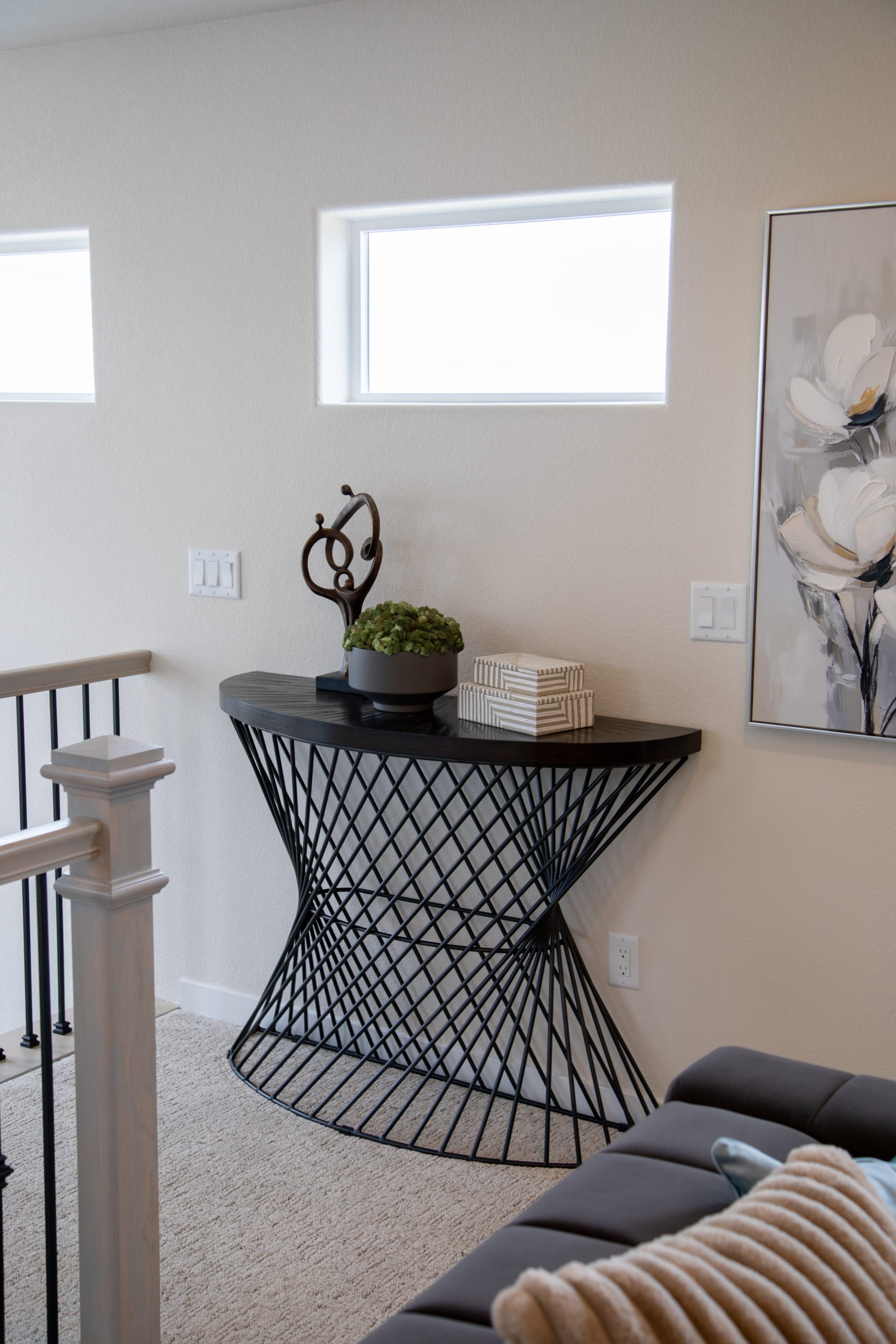
Think crisp lines, soft curves, and a little interplay between the two. A curved sofa can sit alongside an angular coffee table, while a clean-lined sofa leaves room for rounded chairs or an arched mirror. Remember, it’s all about balance.
3. Layer Shine With Softness
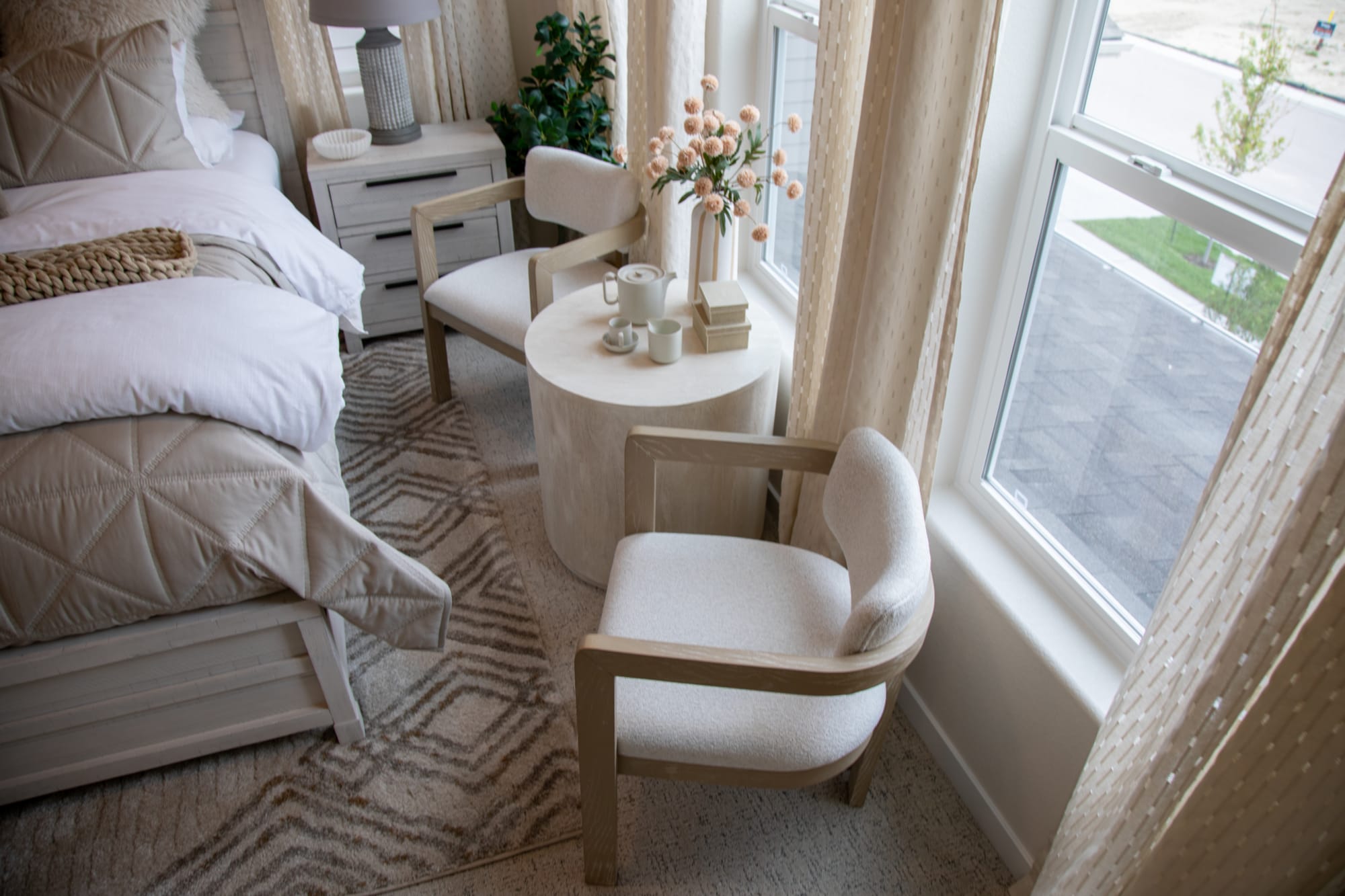
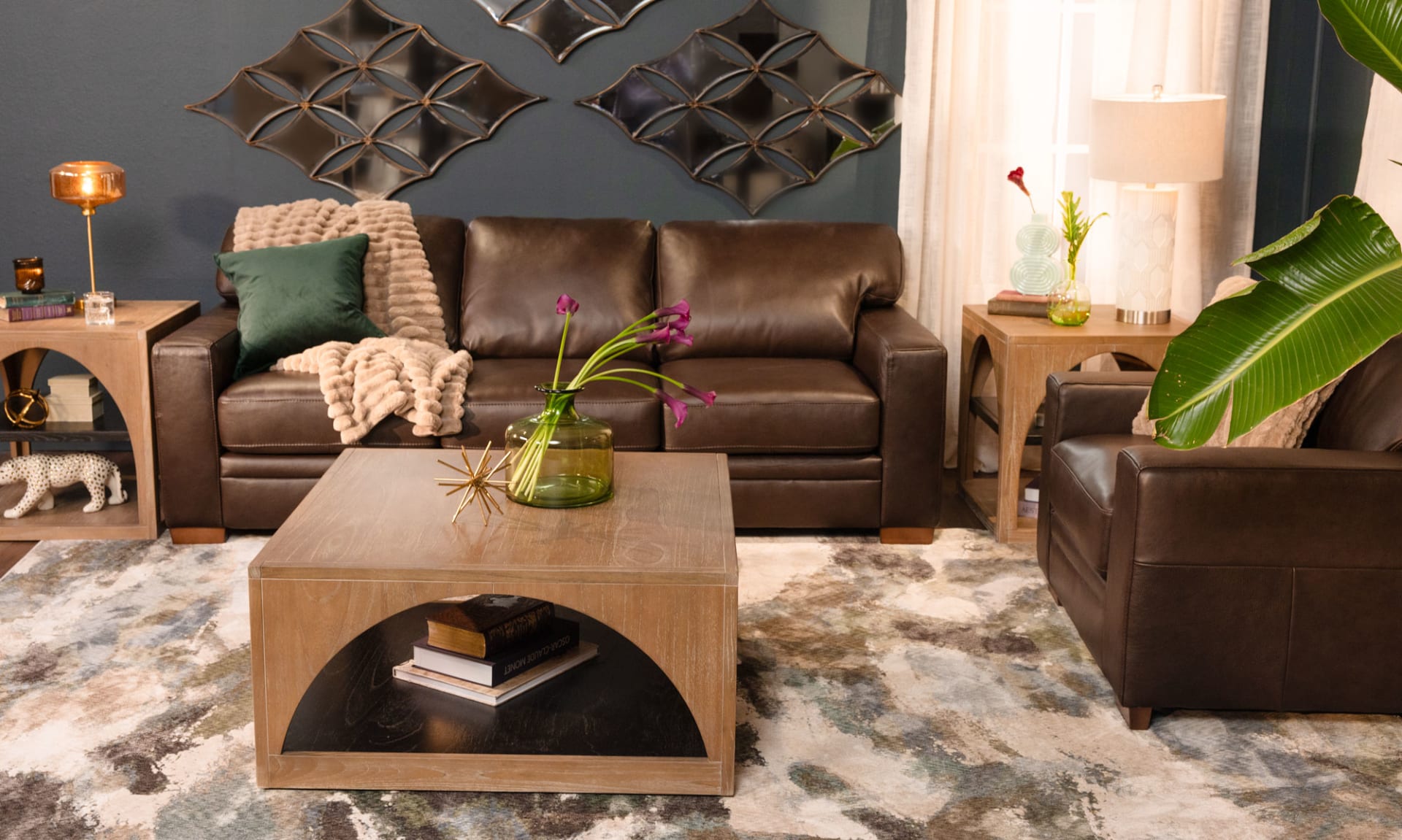
The secret to keeping Art Deco inviting is contrast. Pair reflective materials such as brass, glass, or mirror with warm velvet, plush rugs, leather, and wood.
A brass-and-glass coffee table feels more comfortable beside a velvet sectional. A glossy black dresser becomes more approachable with a soft upholstered bench and a textured area rug.
4. Use Pattern With Intention
Art Deco embraces pattern, but it should look deliberate rather than busy. Start with a geometric rug, patterned wallpaper, or a few graphic pillows.
Choose patterns with:
- Repeating arches or scallops.
- Fan-shaped designs.
- Radiating sunbursts.
- Chevron or herringbone lines.
- Stepped geometric borders.
Art Deco Style: A Room-by-Room Guide
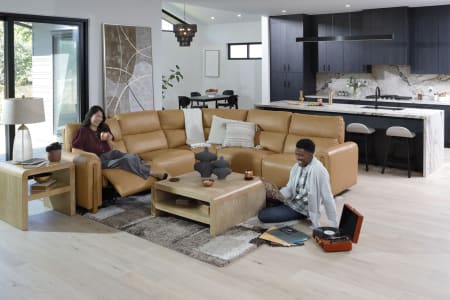
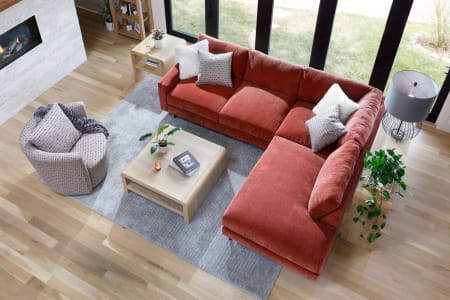
How to Style an Art Deco Living Room
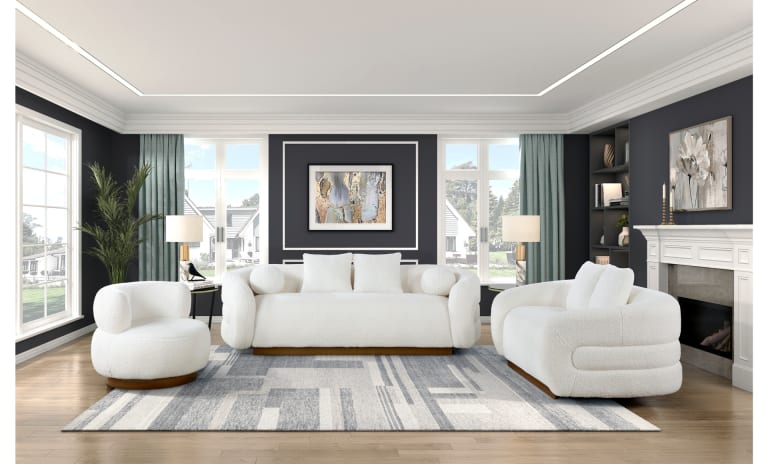
- Start with a statement sofa: Choose a curved sofa for a sculptural focal point, or opt for a clean-lined sofa if you are going to balance it with rounded accent chairs or tables.
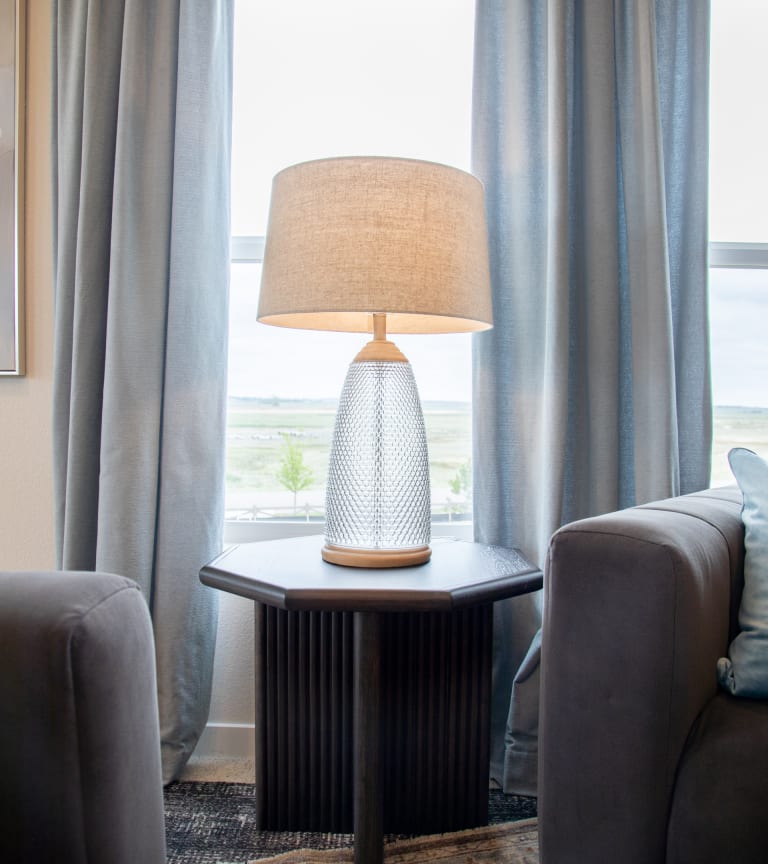
- Frame it symmetrically: Use either geometric or curved accent chairs, end tables, and lamps to ensure a mix of crisp lines with softer shapes.
- Ground the room: Add a geometric rug in black, cream, gold, or a deep jewel tone.
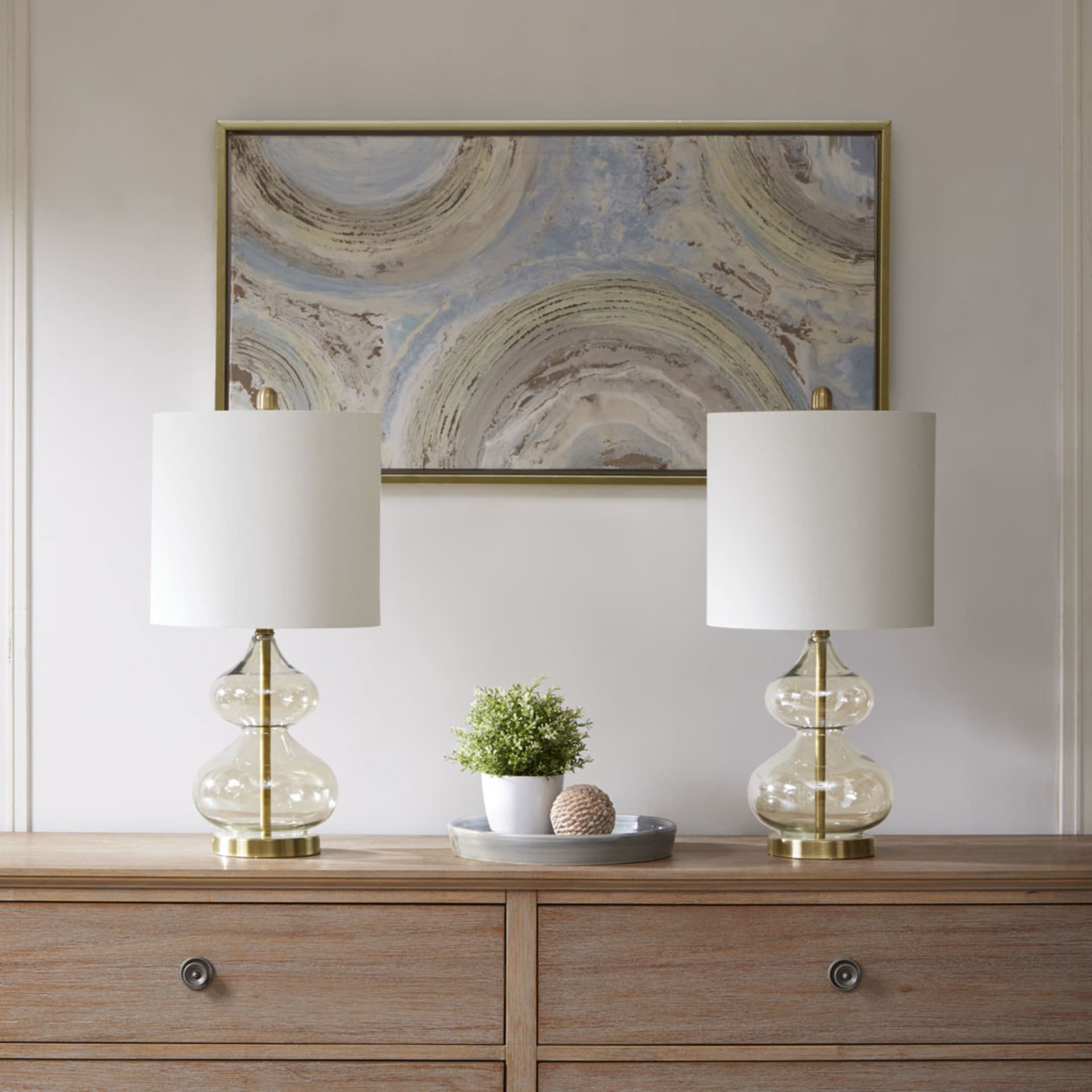
- Make lighting decorative: Choose a globe chandelier, a brass floor lamp, or fluted glass table lamps.
- Finish with shine: A mirror with an arched, scalloped, or sunburst frame adds light and a signature Deco moment.
How to Style an Art Deco Dining Room
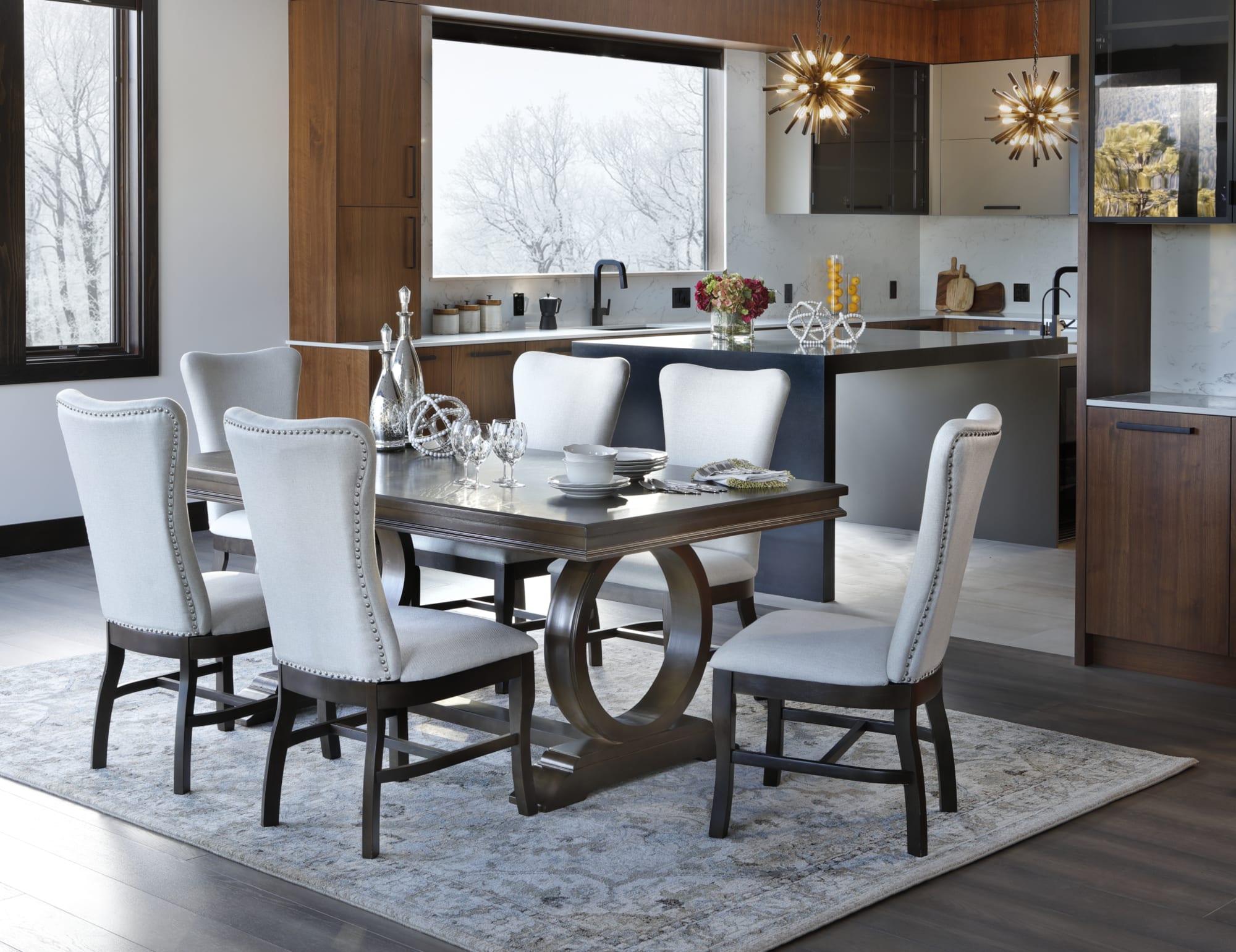
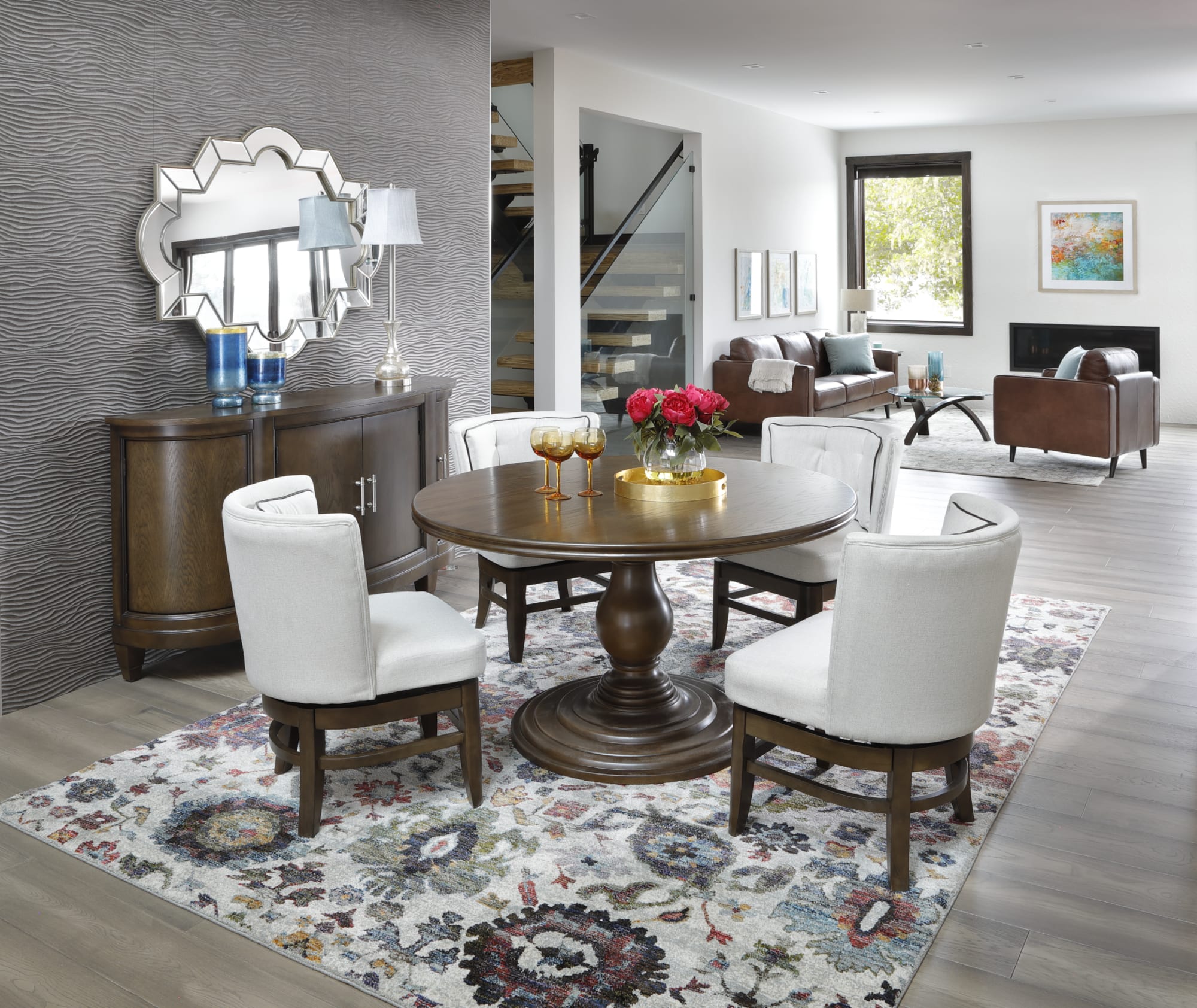
- Pick a table with presence: Try a round table with a sculptural base, or pair a rectangular table with chairs that have curved backs. Wood, marble, and glass table tops give you different ways to build the room’s palette.
- Choose upholstered seating: Velvet, texture-rich upholstered dining chairs in a coordinated color instantly elevate the room.
- Add a statement fixture: Hang a geometric chandelier or tiered globe pendant above the table.
- Use a polished storage piece: A server or sideboard in dark wood, black lacquer, or a warm metallic finish brings both function and visual weight.
- Keep tabletop decor edited: A sculptural vase, a small arrangement of flowers, or a metallic tray is enough.
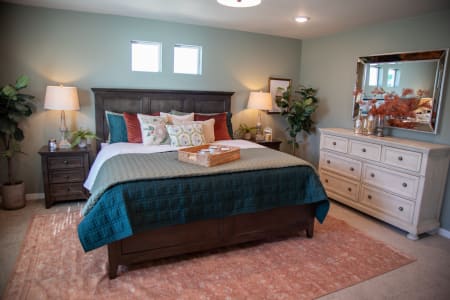
How to Style an Art Deco Bedroom
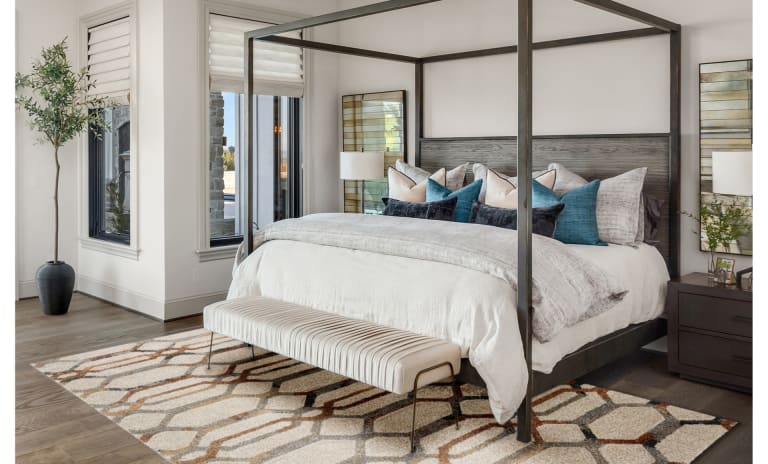
- Lead with the bed: Choose a tall upholstered bed or headboard with channels, curves, or a fan-inspired outline.
- Build contrast in bedding: Layer ivory sheets with a deep green, navy, or wine-colored quilt and a few metallic-accent pillows.
- Bring in reflective surfaces: A mirrored dresser, glass-top nightstand, or brass-framed wall mirror adds glamour without adding clutter.
- Use a bench or chair: A curved velvet bench at the foot of the bed makes the space feel complete.
- Ground the space: Layer a geometric rug beneath the bed. Try bold black and cream for contrast, or softer tones that complement your bedding.
Art Deco Decor Makes an Impact
Small details can establish an Art Deco mood without requiring a complete redesign.
- Add a sunburst or scalloped mirror above a console, fireplace, or bed.
- Display smoked glass, metallic trays, or sculptural vases on a coffee table or sideboard.
- Choose abstract art with arches, geometric blocks, stylized florals, or jewel-toned color fields.
- Incorporate fluted planters, globe lamps, and brass picture frames for subtle Deco references.
- Keep accessories edited: this style is glamorous, but every piece should look selected on purpose.
Final Tips for Mastering Art Deco Style
Art Deco is ultimately a celebration of craftsmanship, confidence, and glamour: a style where sleek geometry meets rich comfort. Which element feels most like your home’s starting point—a jewel-tone statement piece, dramatic lighting, or a geometric rug?
- Give the room a focal point. A sculptural sofa, dramatic wallpaper, or eye-catching light fixture can lead the look. Let the surrounding pieces complement it rather than compete for attention.
- Aim for balance, not a matching set. A pair of lamps or similarly sized pieces on either side of a focal point can create a tailored arrangement while leaving room for different finishes and textures.
- Mix eras thoughtfully. Art Deco works beautifully with contemporary furniture when the room shares a consistent palette, strong shapes, and a few luxe finishes.
- Avoid turning the room into a theme. Rather than adding every possible motif, select two or three recurring ideas—such as curves, brass, and emerald velvet—and repeat them across the space.
Ready to bring a little Deco drama home? Start with the detail that catches your eye, whether it’s a sculptural sofa, a geometric rug, or a touch of brass. Explore our Art Deco style furniture online, or visit your local Furniture Row store to find pieces that make the look your own
Ideas & Inspiration
Go to the Blog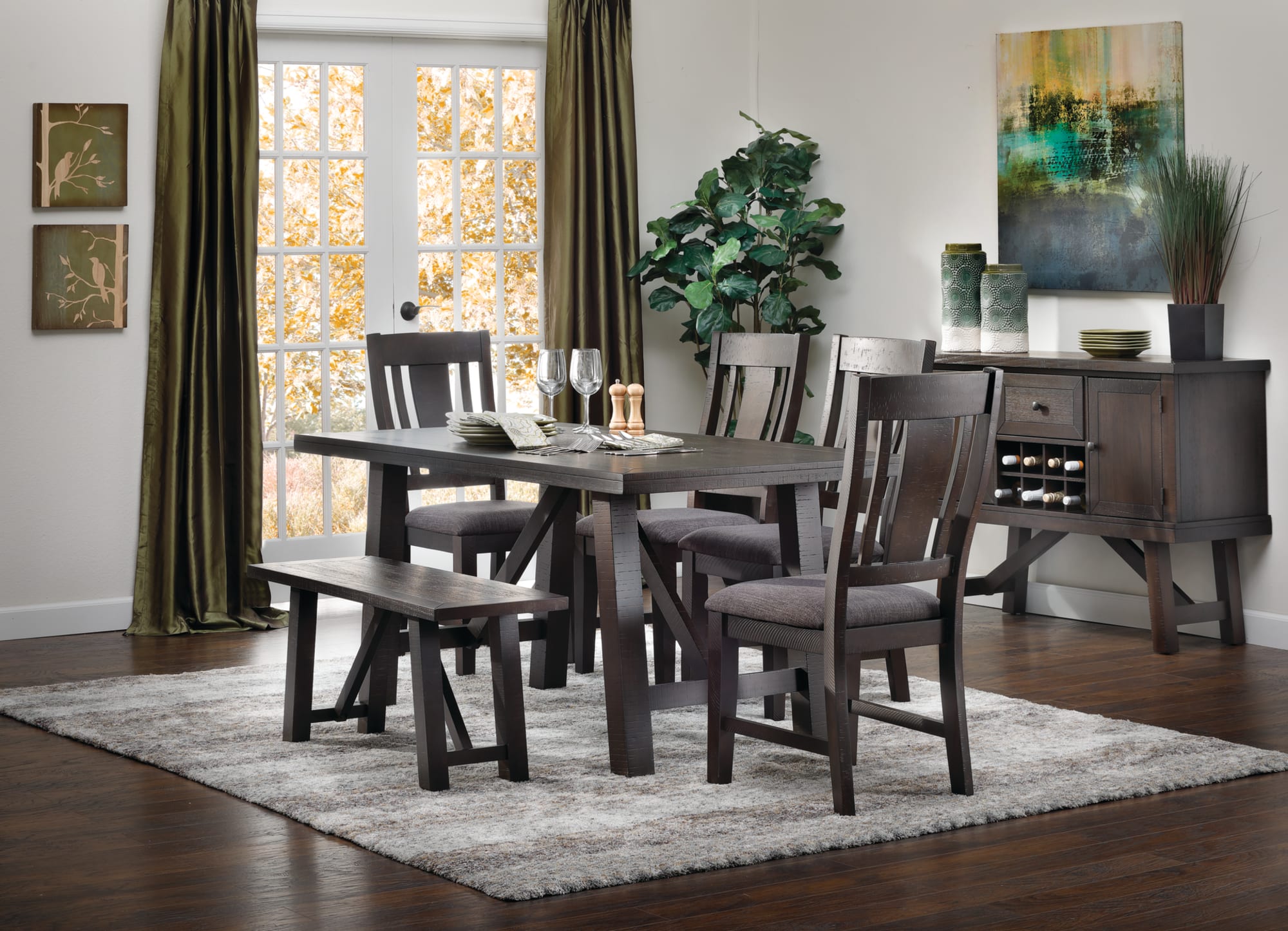
Style Guide: Arts & Crafts Style
Discover Arts & Crafts style furniture, natural materials, and timeless decorating ideas for a warm home.

Style Guide: Minimalist Style
Learn how clean lines and clutter-free spaces can create a serene home with this guide to Minimalist style.
Is Your Style Maximalist, Eclectic, or Whimsical?
Discover the differences between whimsical, eclectic, and maximalist interior design styles to create a personalized home.
Style Guide: Arts & Crafts Style
Discover Arts & Crafts style furniture, natural materials, and timeless decorating ideas for a warm home.
Style Guide: Minimalist Style
Learn how clean lines and clutter-free spaces can create a serene home with this guide to Minimalist style.
Is Your Style Maximalist, Eclectic, or Whimsical?
Discover the differences between whimsical, eclectic, and maximalist interior design styles to create a personalized home.