


Living Room Layout Guide
Your living room is the heart of your home—a space for connection, relaxation, and entertainment. Whether you're hosting a lively gathering, enjoying a cozy movie night, or creating a multifunctional area, the right layout can make all the difference.
This guide explores four versatile living room layouts to help you maximize both style and functionality.
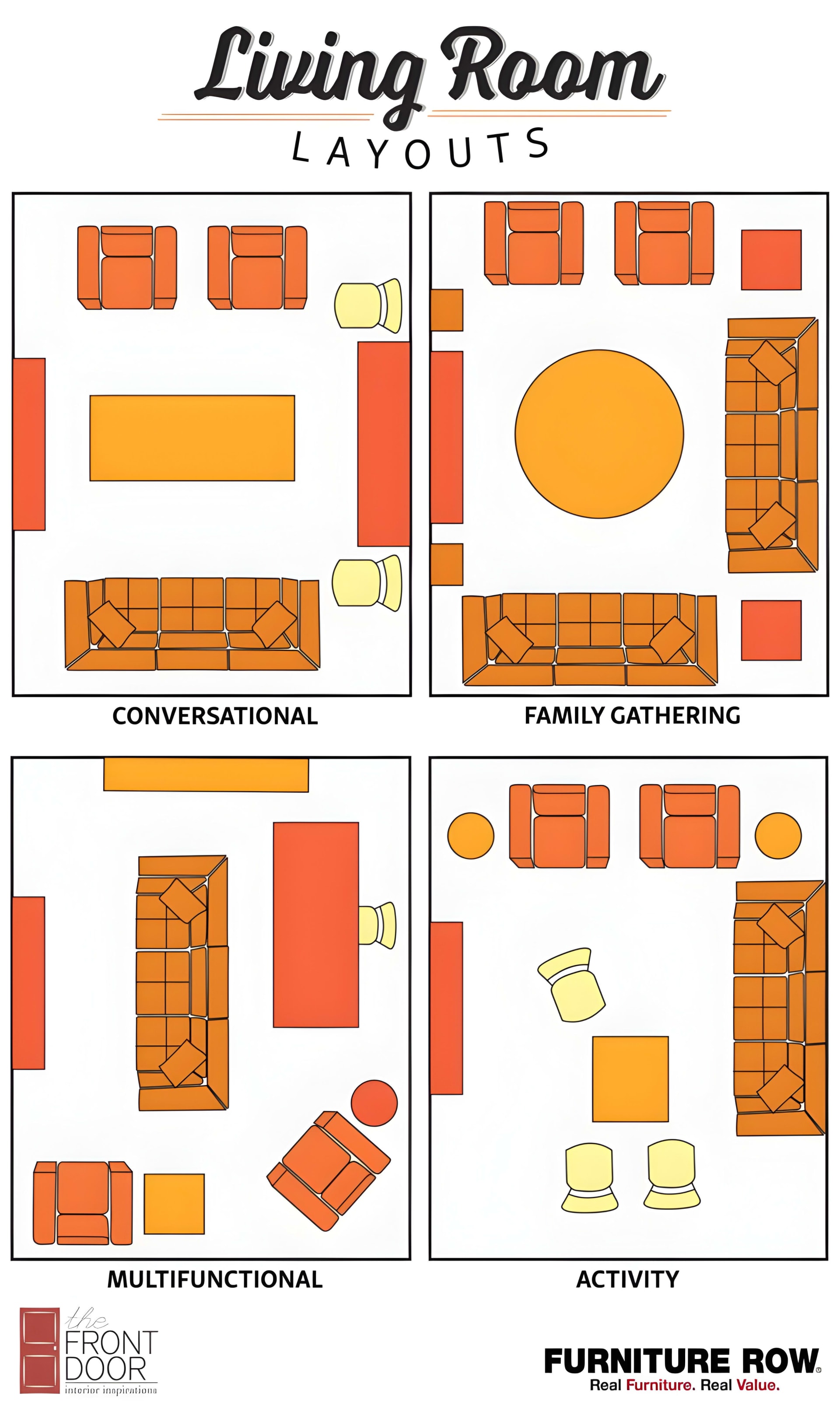
1. Conversational Layout: For Social Butterflies
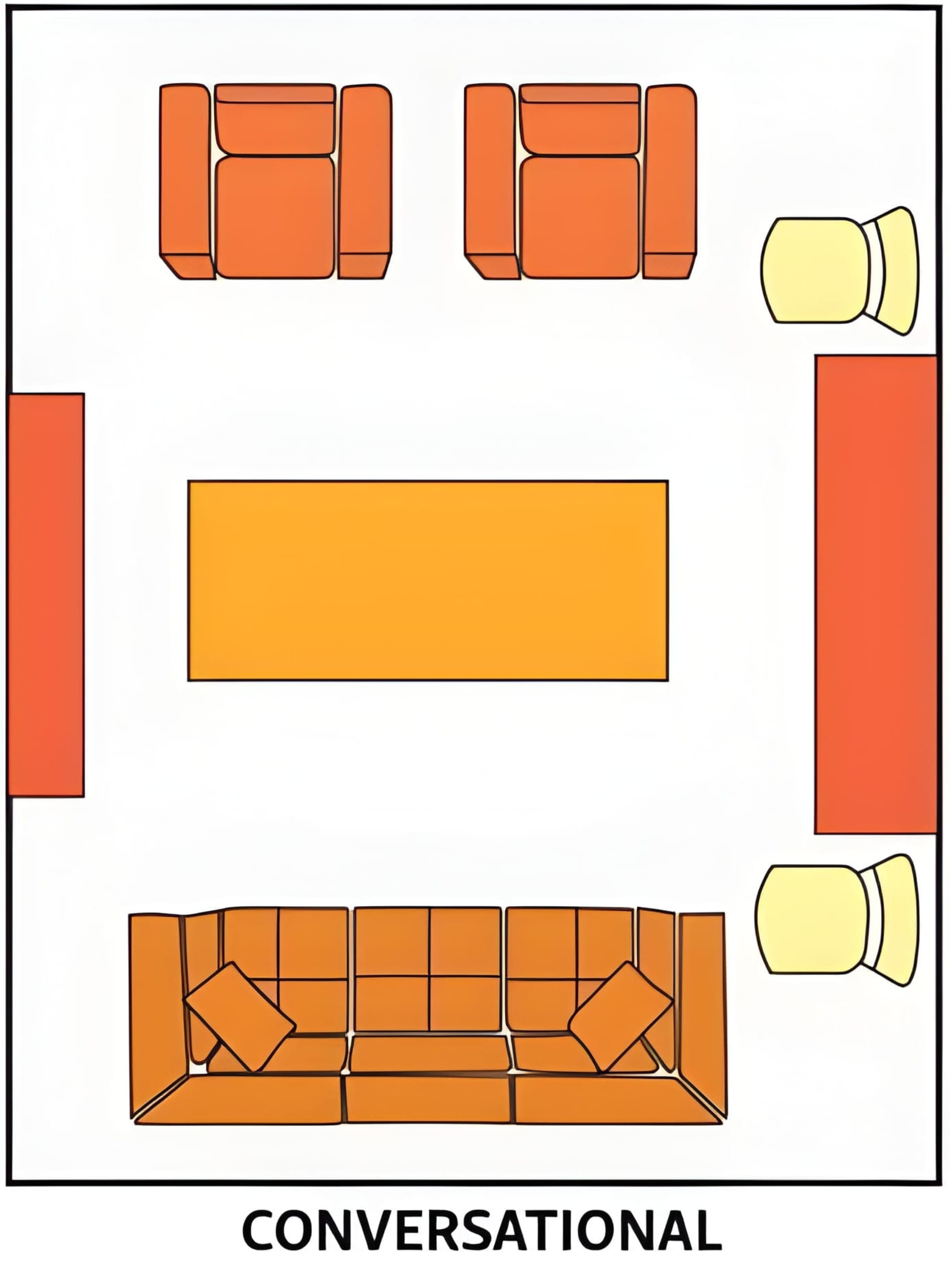
If your living room is where people gather to chat and connect, this layout puts conversation at the forefront.
How to Arrange It:
- Create a symmetrical arrangement by placing two sofas facing each other or pairing a sofa with two accent chairs directly opposite.
- Anchor the space with a central coffee table or a large area rug that touches the front legs of all seating pieces.
- Add a wall entertainment center along one wall for extra storage and a place to display décor (books, framed photos, baskets, and seasonal styling).
- Minimize distractions by placing the TV off-center, hiding it in a cabinet, or removing it entirely to keep the focus on face-to-face interaction.
Tips & Recommendations:
- Matching sofas: A pair of matching sofas or a sofa set creates a balanced, inviting layout that naturally encourages conversation. Look for sofas with removable cushions or easy-care upholstery—perfect for family spaces and entertaining.
- Swivel accent chairs: Swivel chairs are social butterflies—they let guests turn effortlessly toward the action. Try pairing them with a small side table so each seat has a convenient place for drinks.allow guests to turn easily toward different conversations or views.
- Round coffee tables: Round coffee tables facilitate better flow and make it easy for everyone to reach snacks and drinks. Choose one with a lower shelf for bonus storage, or opt for a lift-top coffee table.
- Sofa Table Behind the Sofa: Placing a sofa table behind one sofa creates a handy drop zone for keys, books, or accent lamps, and subtly divides the living area from adjoining spaces.
2. Family Gathering Layout: Entertainment Meets Comfort
For families who love movie nights or game days, this layout balances comfort with functionality. Very similar to the conversational living room layout, however, the function allows for more entertainment, such as watching movies or television.
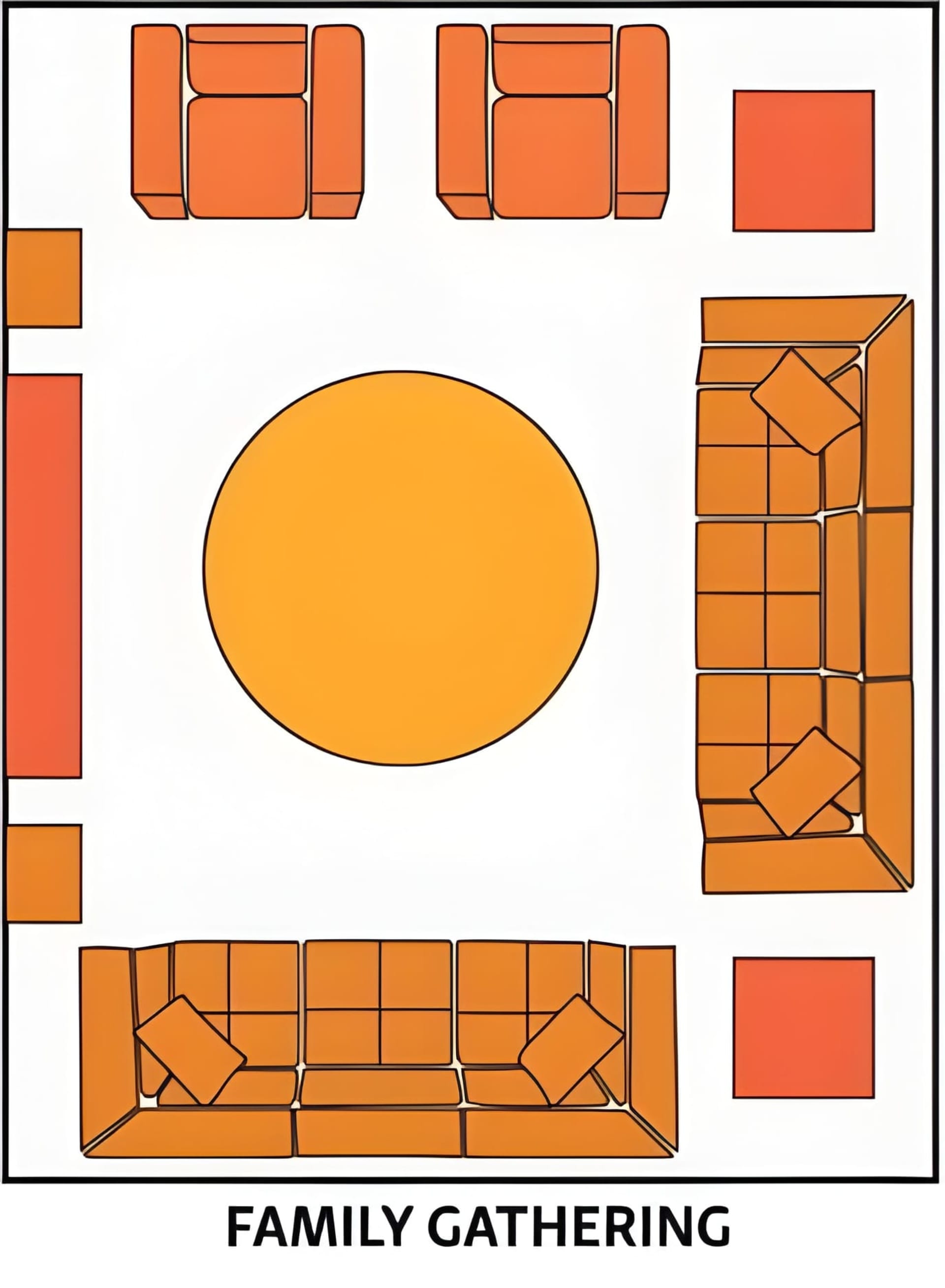
How to Arrange It:
- Orient the main seating (like two sofas or a large sectional) toward the TV stand or entertainment center for the best viewing angles.
- Place two living room chairs across from one of the sofas to round out the layout and boost seating
- Use a large central coffee table to keep snacks, remotes, and board games within reach from every seat (and to visually “lock in” the seating group).
- Calculate the right distance between your sofa and the screen—Pro tip: divide your TV size (in inches) by 8 to find the ideal viewing distance in feet!
Tips & Recommendations:
- L-shaped sectionals: L-shaped sectionals and modular sectionals offer distinct spots for lounging, napping, and sitting upright. For maximum comfort, look for one deep seats so everyone has a favorite spot for movie nights or game days.
- Recliners or motion furniture: Recliners provide personalized comfort for long movie marathons. Many modern models come with built-in USB charging, cup holders, or storage arms—handy for marathon sessions (and fewer lost remotes!)
- Media consoles with storage: Storage TV stands keep cables, gaming systems, and remotes organized and out of sight.
- Layered Lighting Try using a mix of light sources, like overhead fixtures for games and softer table lamps for a cozy movie theater ambiance.
3. Multifunctional Layout: Flexibility for Modern Living
If your living room doubles as an office, playroom, or hobby zone, this layout prioritizes adaptability without sacrificing style.
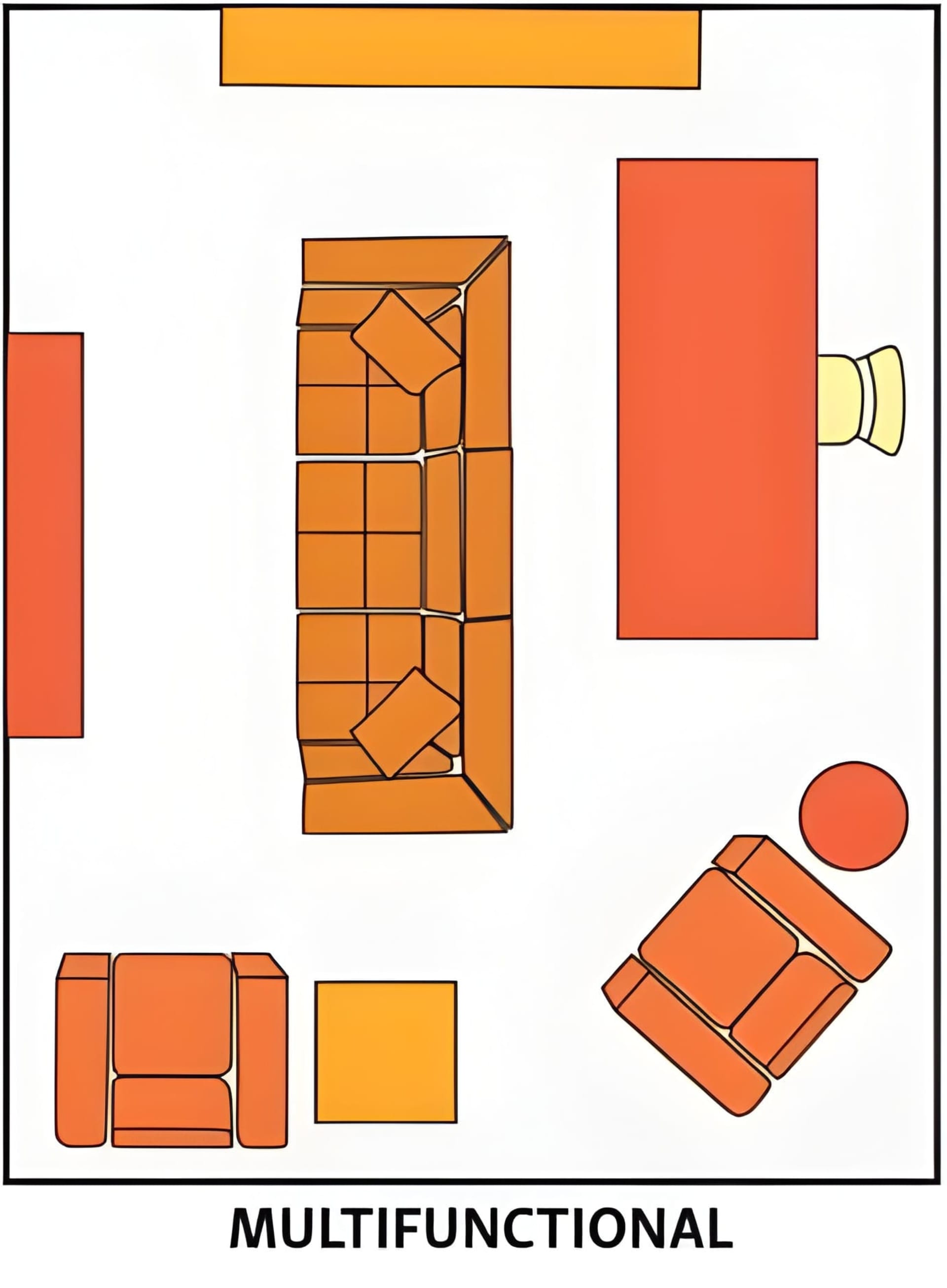
How to Arrange It:
- Create a true viewing zone by placing the sofa directly in front of the TV and TV stand, with the seating oriented to the screen (this keeps the “living room” function clear, even in a multipurpose space).
- Behind the sofa, add a dining table to act as a flexible second zone—use it as a work-from-home desk by day and a dining/game table by night (the sofa acts like a natural room divider).
- Style the corners with one or two accent chairs, then add a sofa table (or slim console) nearby as a landing spot for lamps, a laptop, or décor—this makes the room feel finished without stealing floor space.
- Zone the room by using area rugs or furniture orientation (like the back of a sofa) to visually separate the "living" area from a work or play space.
Tips & Recommendations:
- Expandable or Drop-Leaf Dining Tables: If your dining area shares space with the living room, an expandable or drop-leaf table offers the flexibility to seat more people for dinner or fold down for extra floor space during the day.
- Swivel or Lightweight Accent Chairs: Accent chairs that swivel or are easy to move can float between conversation zones or slide up to the dining table for game night.
- Tall Bookcases or Console Tables: Maximize your vertical or horizontal storage space with bookcases or console tables—perfect for organizing books, displaying décor, and keeping everyday essentials off the floor.
- Keep traffic paths clear by placing larger furniture against walls and keeping the center of the room open for movement.
4. Activity Layout: Designed for Fun and Function
Perfect for families with kids or people with open floor plans, this layout divides your living room into distinct activity areas.
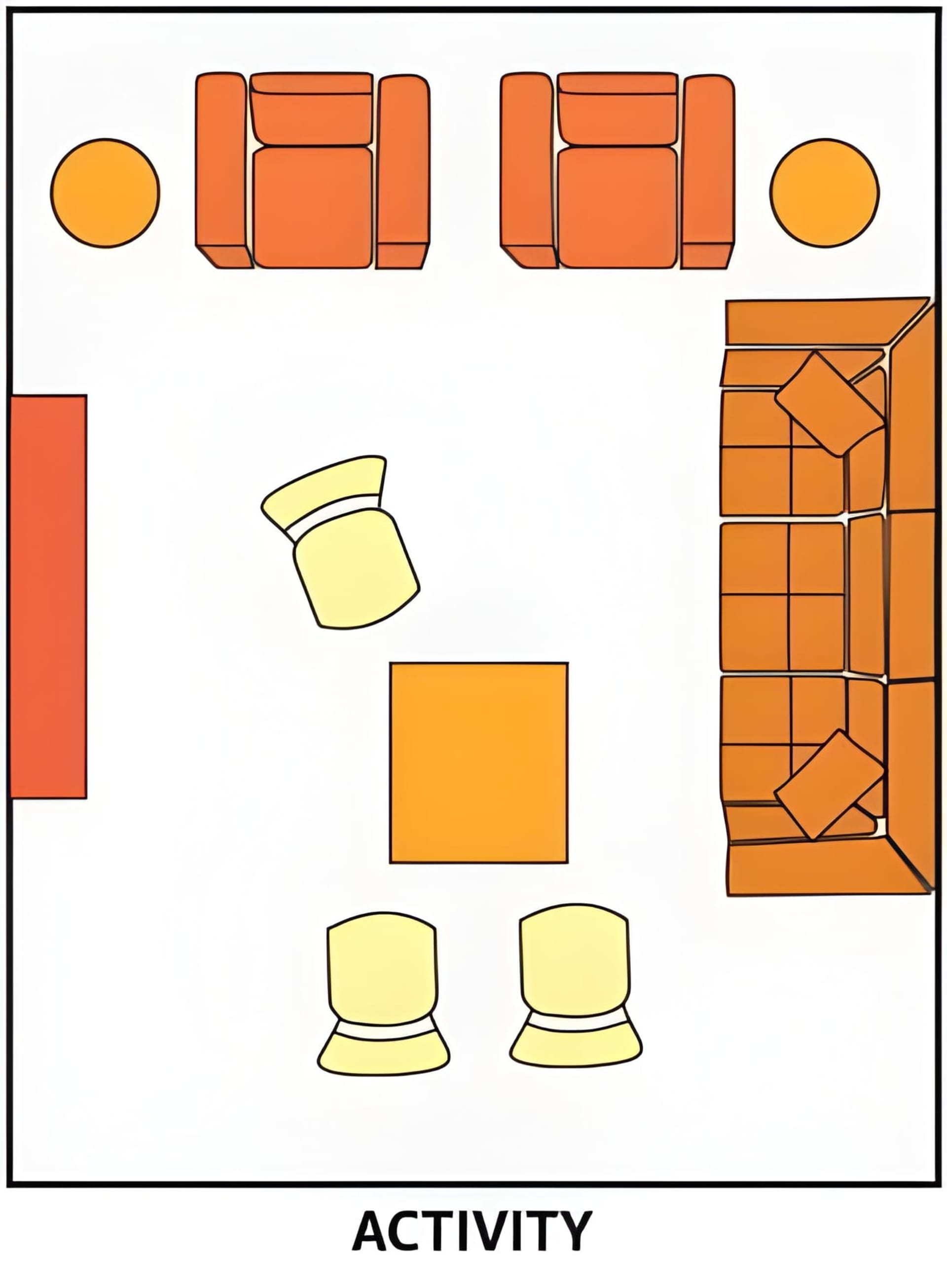
How to Arrange It:
- Anchor the room with by placing the sofa across from the TV stand, then add two living room chairs along the corresponding wall to complete a comfortable viewing-and-chat setup.
- Create a secondary zone by placing a small dining table or counter height set in a space apart from the seating area (a dedicated spot for puzzles, homework, or snacks).
- Add a small surfaces beside chairs with matching side tables for lamps, drinks, and charging - or swap in small ottomans/poufs when you want flexible extra seating that can slide into the activity area fast.
- Mix seating styles to distinguish the areas—use comfortable lounge seating for the main conversation circle and structured chairs like dining chairs for the activity table.
Tips & Recommendations:
- Performance fabric sofas: Choose sofas upholstered in durable, easy-clean performance fabrics. For even more kid-friendliness, opt for removable, washable cushion covers.
- Multi-Use Kids’ Table & Chairs: Select a kid-sized table with wipeable surfaces and sturdy chairs; look for tables with built-in storage or adjustable height to grow with your children and adapt to art projects, homework, or snack time.
- Area Rug: Place an easy-to-clean area rug under the kids’ table to define the activity zone, soften playtime, and catch crumbs or spills for quick cleanups.
- Compact Storage Cabinets or Sideboards: Tuck a slim cabinet or sideboard against a wall for “grown-up” storage of board games, art supplies, or extra blankets; closed storage keeps the room looking tidy even on busy days
How to Bring Your Layout to Life
Here are some quick tips to make these layouts work in your home:
- Test before committing: Use painter’s tape on the floor to map out furniture placement before moving heavy pieces.
- Prioritize flow: Leave at least 3 feet of walking space between furniture pieces.
- Layer thoughtfully: Rugs anchor zones; lighting sets moods; throw pillows add personality.
- Invest in versatility: Look for multifunctional furniture like storage ottomans or extendable tables that adapt as needed.
Happy decorating!