


Small Living Room Layout Guide
Small living rooms can do big things—it’s all about choosing the right layout and a few smart pieces that earn their keep. Whether you’re hosting friends, settling in for movie night, or carving out a spot to work from home, a thoughtful arrangement can make your space feel more open and more comfortable.
Below, our designers created four small living room layout options you can use as a starting point, plus simple tips to help you pick furniture that fits (and keeps your walkways clear).
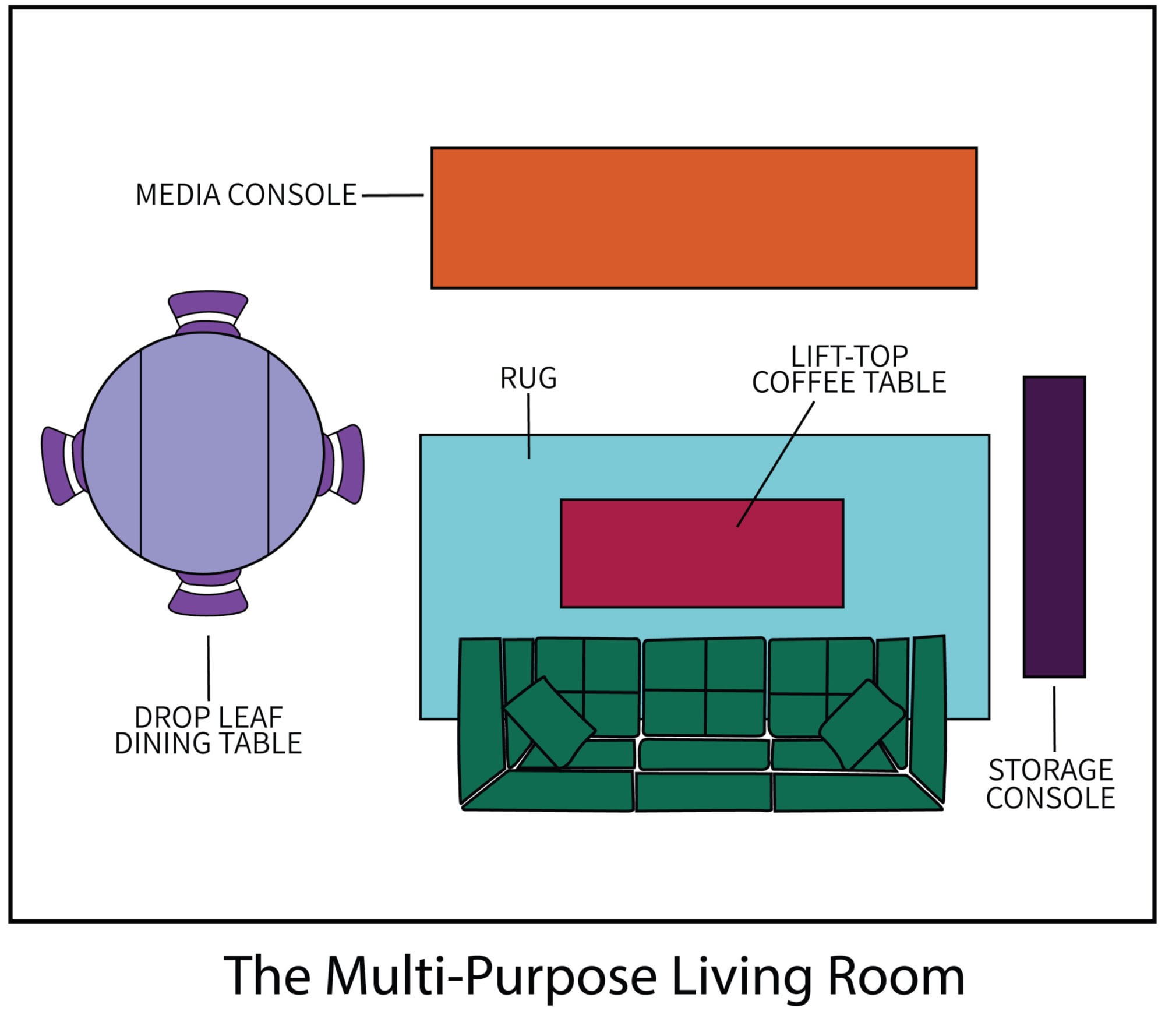
Layout Option 1: The Multi-Purpose Living Room
Best for: Studio apartments, work-from-home setups, families that need hybrid spaces
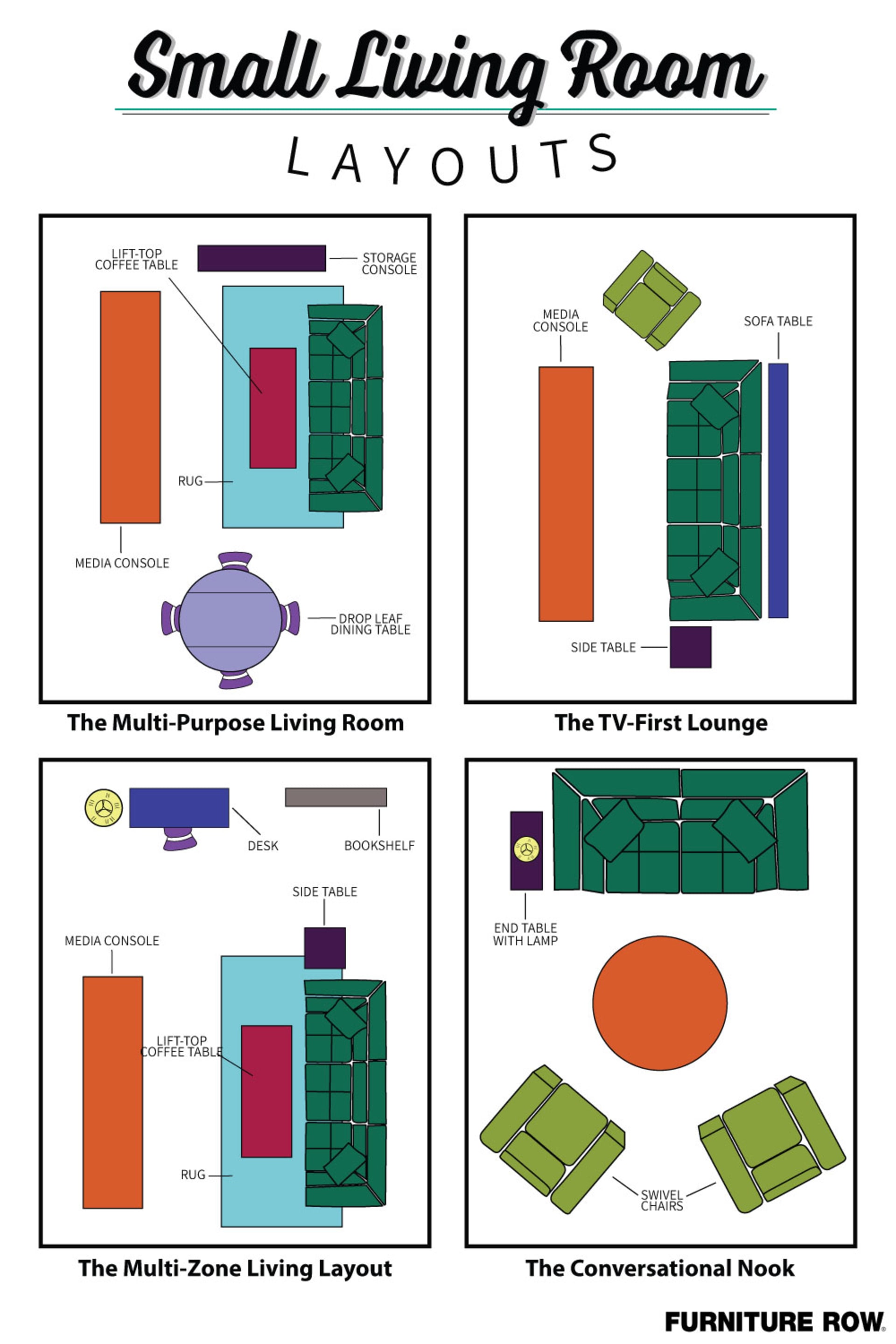
If you want your small living room to work smarter—not harder—this layout is all about choosing pieces that support everyday comfort and effortless flow. It focuses on furniture that enhances function, improves sightlines, and keeps the space feeling open rather than crowded.
How to Arrange It
- Float a sofa or sectional to create a subtle divider between the living zone and the work/dining zone.
- Use a drop-leaf dining table, console-turned-desk, or a compact workstation behind the sofa.
- Add a rug under the seating area to clearly signal the "living" portion of the room.
- Place a server, console, or other storage piece along the longest wall to avoid crowding.
Tips & Recommendations
- Prioritize multi-function heroes like lift-top coffee tables (work/eat + store) and storage benches (extra seating + stash space).
- Modular or reversible sectionals make it easier to reconfigure when your needs shift (WFH weekdays, guests on weekends).
- Use the back of the sofa as your “desk wall” to keep the workspace streamlined and visually contained.
- Focus on hidden storage, reversible chaise designs, and other true multi-function features (not just “small scale”).
- Choose durable upholstery options (performance fabrics, wipeable finishes) suited for hybrid use.
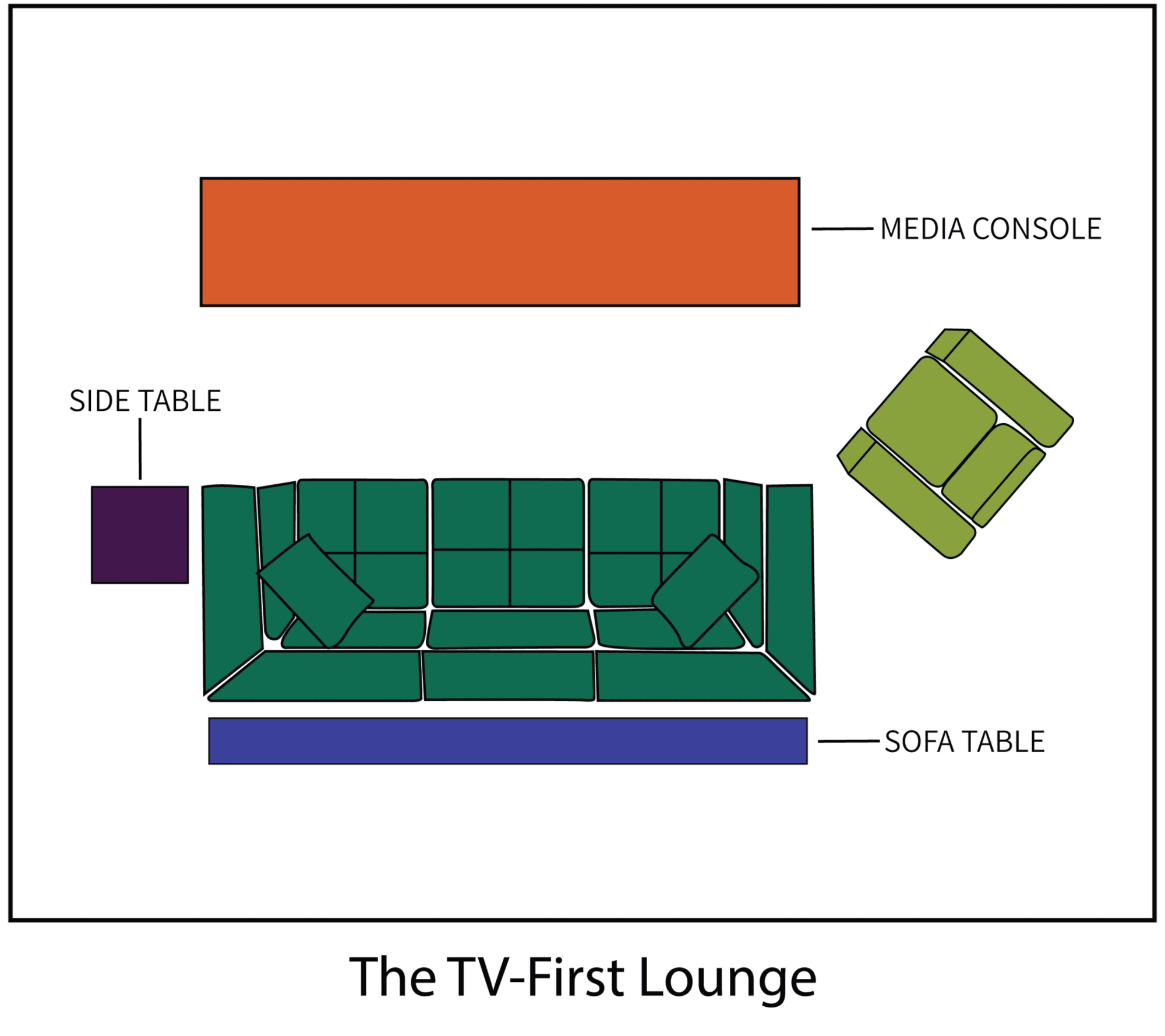
Layout Option 2: The TV-First Lounge
Best for: Long, narrow rooms, apartment layouts, households that unwind with shows/movies
If you love hosting movie nights or binge-watching your favorite shows, this setup is the ultimate small-space entertainment layout. It prioritizes clear TV visibility, great sound flow, and comfortable seating—without overwhelming the room.
How to Arrange It
- Position a slim-profile sofa directly facing the TV wall for the ideal viewing angle.
- Place a TV stand across from the sofa. To find the best viewing distance, take the size of your TV (in inches) and divide it by 8—this will show how far away to place your TV (in feet)!
- If room allows, add one accent chair angled slightly toward the TV to expand seating without blocking sightlines.
- Incorporate a narrow side table or chairside table for remotes and snacks—functional, but visually light to maintain an open feel.
Tips & Recommendations
- Try a small 2 pc. chaise sectional if you want lounge comfort in a small footprint,(especially helpful for defining the “TV zone”).
- In narrow rooms, prioritize a slim TV stand/console (roughly 15"–17" deep) to protect walkway space.
- To visually expand the room, place a full-length mirror opposite a window to bounce light around.
- Consider armless chairs or lower-profile pieces intight spaces to save inches where it matters most.
- Look for sofas with shallower depths (about 32"–36") so you keep clearer pathways and better flow.
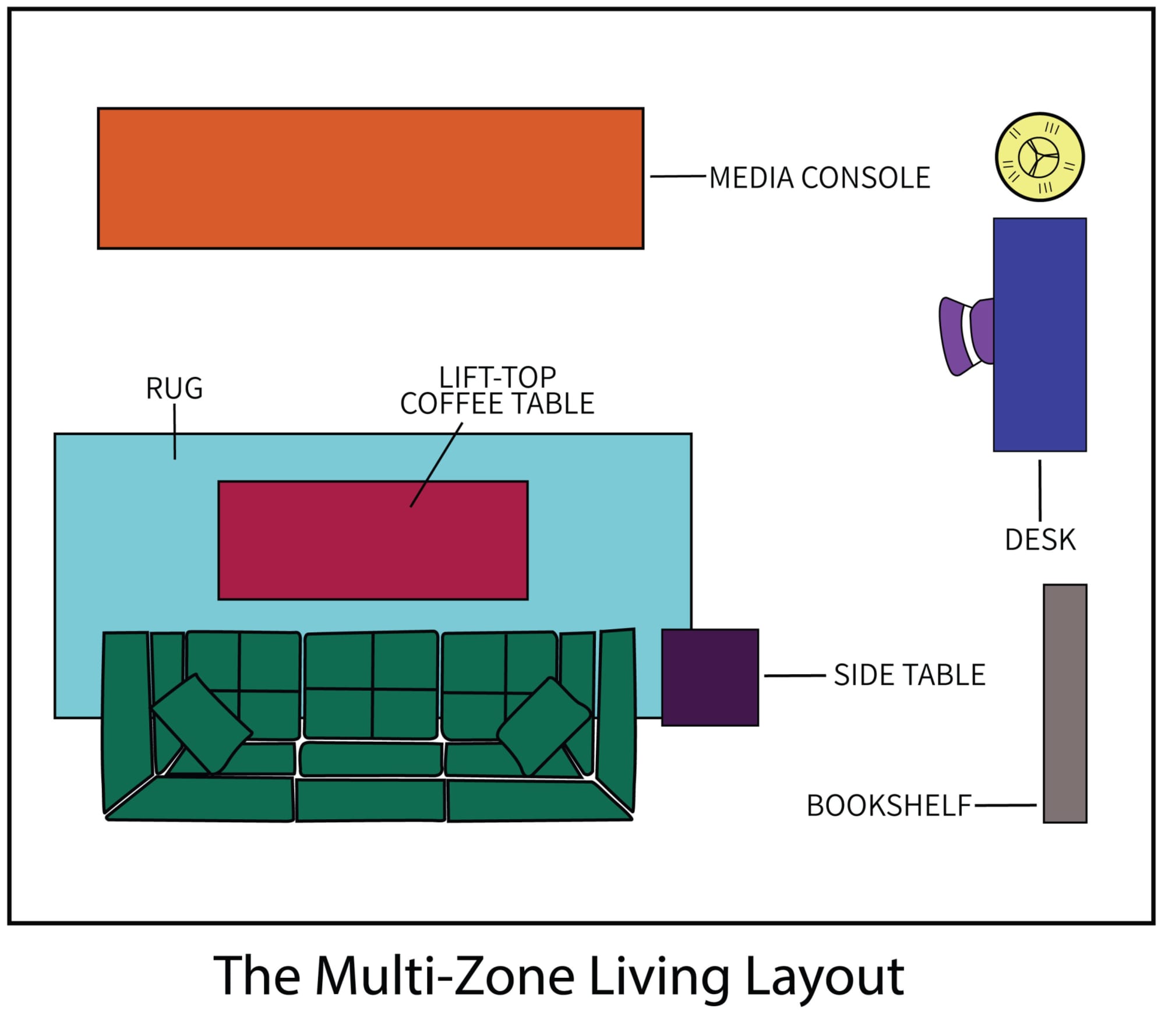
Layout 3: The Multi-Zone Living Layout
Best for: Work-from-home lifestyles, compact apartments, and rooms that serve multiple functions
If your small living room pulls double (or triple) duty—acting as a lounge, workspace, dining spot, or play area—this layout is designed to create distinct zones without overwhelming the room. It helps your space stay organized, functional, and visually calm while still supporting everything your daily life requires.
How to Arrange It
- Start with a compact sofa to anchor the lounging zone and position it so it across from your TV stand or entertainment center.
- Add a small dining table or a lift-top coffee table to create a flexible dining or work zone without adding bulk.
- Keep pathways open by placing storage pieces—like a bookshelf or console—along walls rather than in traffic flow.
- Define each zone subtly with lighting and a rug to give the space structure without adding physical dividers.
Tips & Recommendations
- Look for modular designs and integrated storage—especially in sofas, tables, consoles, and ottomans.
- Use nesting or stackable side tables so you only “pull out” surface space when you need it.
- Lean on placement (rug + furniture angles) instead of partitions to keep a small room feeling calmer and less chopped up.
- Store rarely used items in under-sofa bins to reduce visual clutter across zones.
- If you need quick-change flexibility, movable pieces like coffee tables on casters make reconfiguring much easier.
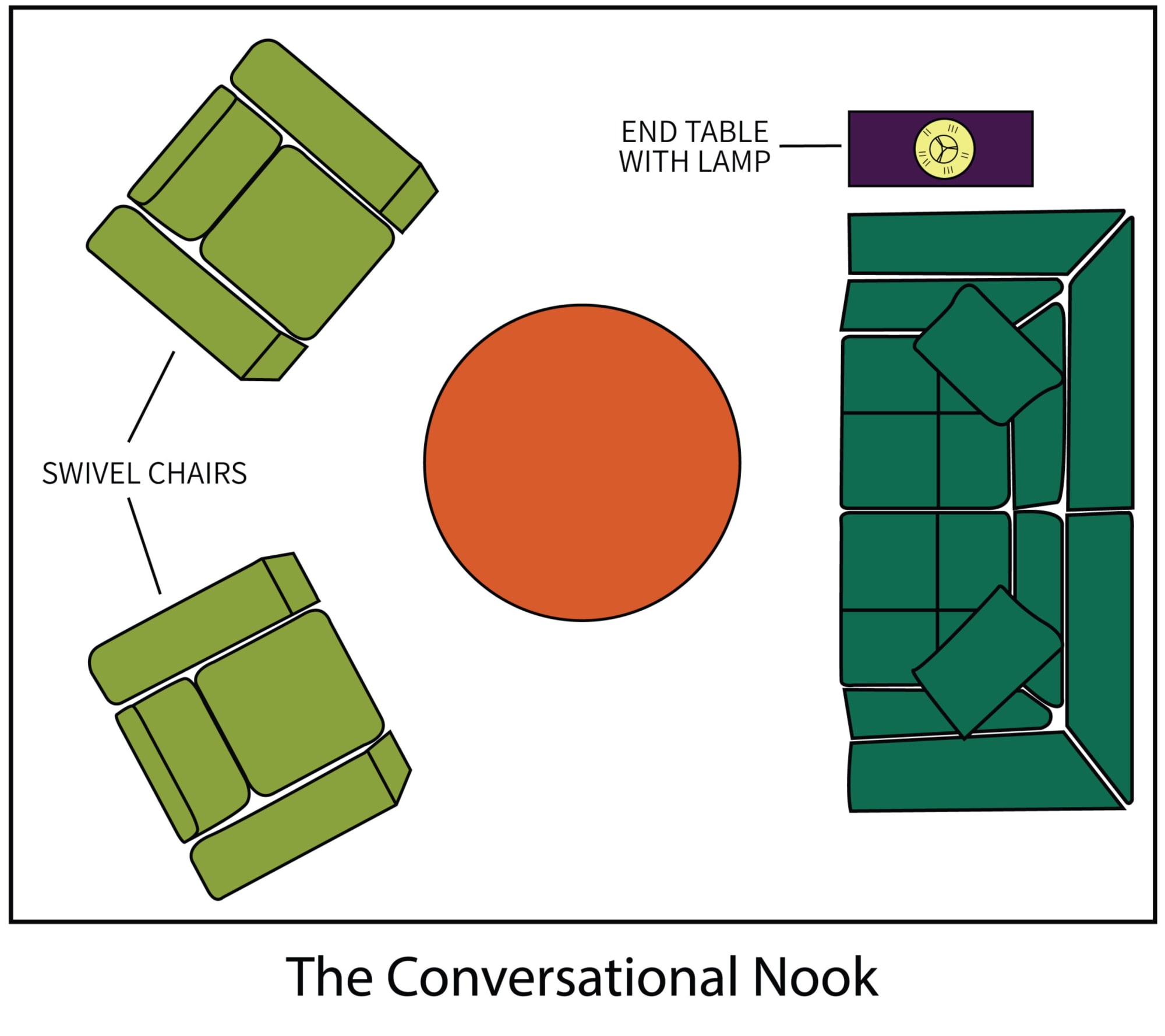
Layout Option 4: The Conversational Nook
Best for: Square rooms, open-concept spaces, social households
If your living room is the heart of conversation—hosting friends, family movie nights, and casual lounging—the conversational nook layout prioritizes seating and flow. Instead of anchoring everything around a TV wall, this layout centers on face-to-face connection.
How to Arrange It
- Place a small sofa or loveseat on one wall.
- Add two compact accent chairs directly across from it.
- Use a round coffee table in between to soften traffic flow and visually open the space.
- Complete the space with a chairside or end table with a lamp between the accent chairs or on either side of the sofa.
- Float pieces slightly off the wall when possible. Even 2–3 inches creates the illusion of space.
Tips & Recommendations
- Start with an apartment-size sofa (about 68"–76") to get real comfort without overpowering the room.
- Choose barrel or slipper chairs for full-size seating with less visual bulk than wide arms and deep frames.
- Swap your coffee table for a storage ottoman when you want hidden space for throws, games, or remotes.
- Pick nesting tables when you want flexibility (spread out for guests, tuck away day-to-day).
- If you need maximum flexibility, swivel chairs can help tight conversational layouts feel more adaptable.
- Consider wall sconces instead of floor lamps to free up floor area around seating.
Small Shifts for Huge Impact
Small living rooms feel their best when the layout comes first—start with the option that matches how you actually use the room, then let a few right-size, multi-purpose pieces do the heavy lifting. Keep pathways open, choose furniture with lighter visual profiles (and built-in function when you can), and don’t be afraid to tweak the arrangement by a few inches until it flows.
Ready for the next step? Explore our living room furniture and build a space that feels open, comfortable, and made for your day-to-day. Happy arranging!
More Layout Guides:
Go to the Blog
Living Room Layout Guide
Design the perfect living room layout with four easy setups—conversational, family, multifunctional, and activity-based—to maximize comfort, flow, and style.
Studio Apartment Layout Guide
Make your studio apartment feel spacious and stylish with four smart layouts for entertaining, lounging, working, and everyday living—plus space-saving furniture tips.
Football Game Day Layout Guide
Make your living room game-day ready with four easy layouts for TV viewing, rival fans, kid zones, and multi-activity hosting.
Living Room Layout Guide
Design the perfect living room layout with four easy setups—conversational, family, multifunctional, and activity-based—to maximize comfort, flow, and style.
Studio Apartment Layout Guide
Make your studio apartment feel spacious and stylish with four smart layouts for entertaining, lounging, working, and everyday living—plus space-saving furniture tips.
Football Game Day Layout Guide
Make your living room game-day ready with four easy layouts for TV viewing, rival fans, kid zones, and multi-activity hosting.